Blackjack Odds If You Play By The Book
Blackjack is often described as one of the best casino games for players who are willing to learn. That does not mean it is easy to win. It does not mean the casino has no advantage. It simply means that blackjack gives players more meaningful decisions than many other casino games.
The phrase “play by the book” usually means using basic strategy. Instead of guessing, copying other players, or relying on lucky feelings, the player follows the mathematically recommended move for each hand.
That can make a real difference.
A player who regularly makes poor decisions gives the casino a much bigger advantage. A player who understands blackjack basic strategy for beginners can usually reduce the house edge and avoid many costly mistakes.
However, playing by the book does not guarantee profit. Blackjack is still a gambling game. Short-term results can be unpredictable, and even correct decisions often lose. The real value of playing by the book is that it gives you a stronger long-term approach.
What Does “Playing By The Book” Mean?
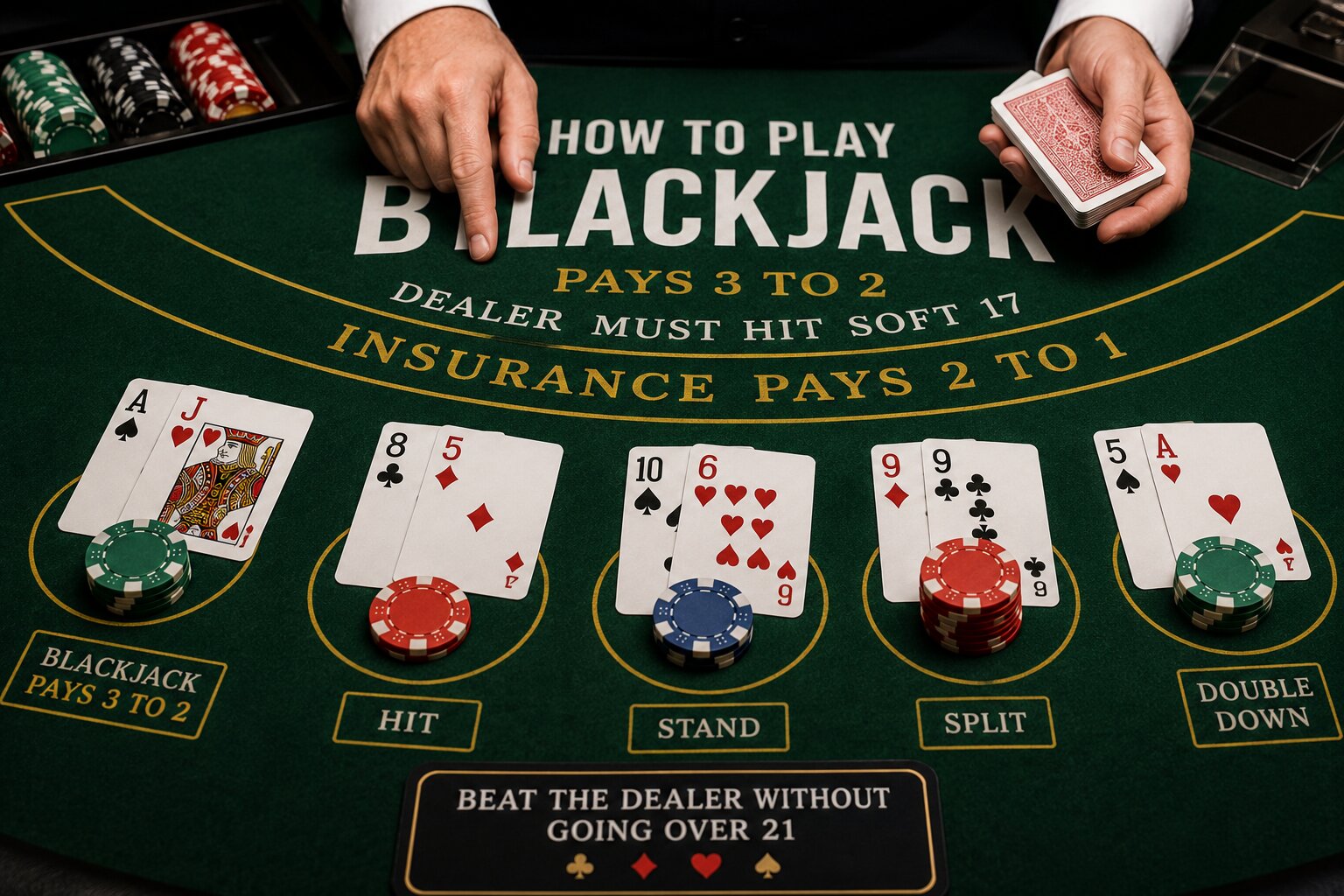
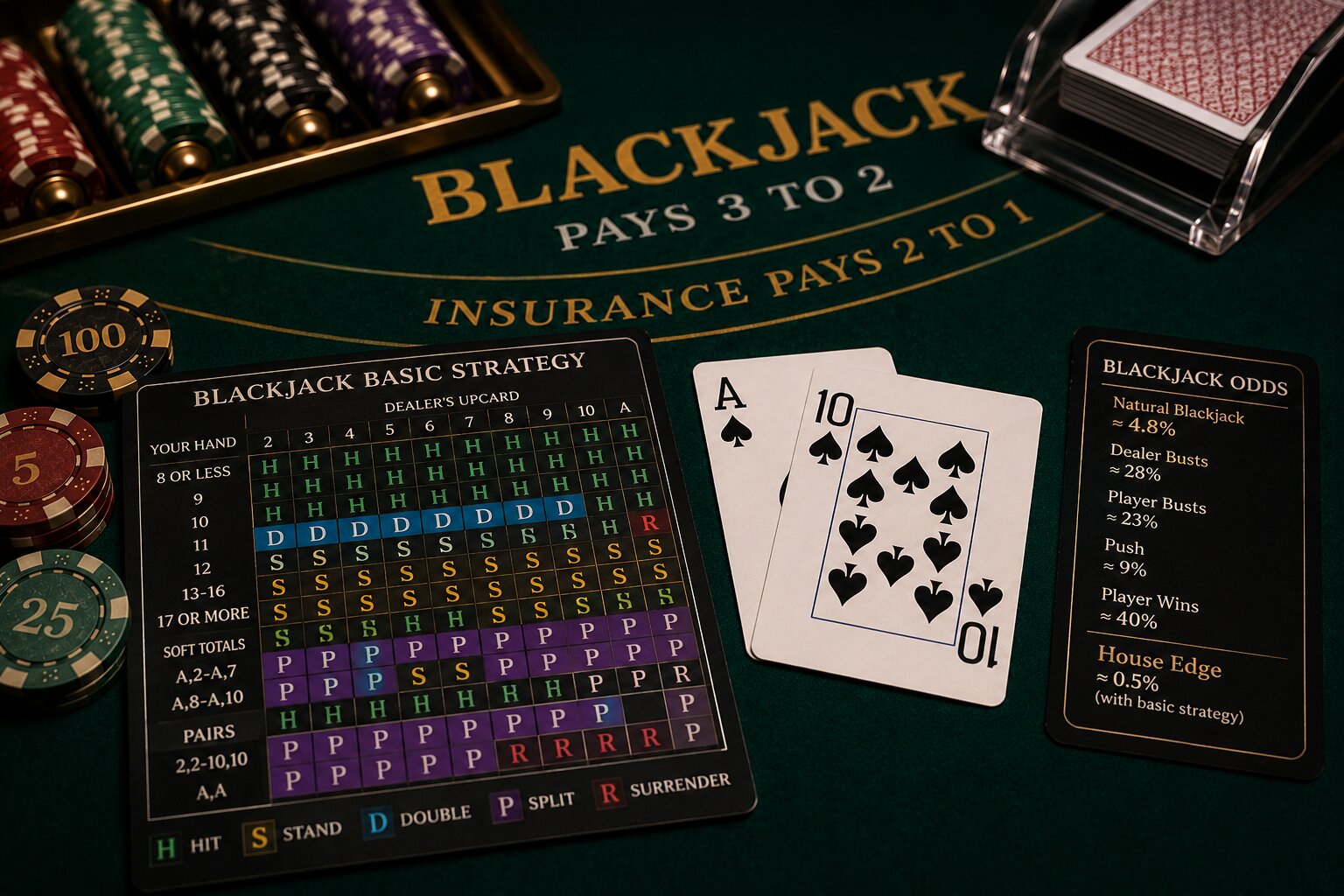
In blackjack, playing by the book means following a basic strategy chart.
A basic strategy chart tells you the recommended move based on two things:
your hand
the dealer’s visible card
The chart may tell you to hit, stand, double down, split, or surrender, depending on the situation.
For example, if you have a hard 16 and the dealer shows a 10, basic strategy will often recommend hitting. That can feel uncomfortable because you may bust. But the chart is not trying to make the safest-looking decision. It is trying to make the best long-term decision.
This is the key idea behind common blackjack strategies. The right decision is not always the one that feels good in the moment.
Why Blackjack Odds Are Different From Fixed-Odds Games
Blackjack odds are different from games where player decisions do not affect the result.
In roulette, for example, the player chooses a bet and then waits for the wheel to decide the outcome. Once the ball is spinning, there are no further decisions to make. Understanding roulette rules and strategy can help players understand bet types, payouts, and risk, but it does not change the odds of an individual spin.
Blackjack works differently.
The cards are still uncertain, but the player has decisions during the hand. Hitting, standing, doubling, splitting, and surrendering can all affect the expected result.
This is why two players at the same blackjack table can face very different long-term outcomes. One may follow basic strategy closely. Another may stand too early, split poor pairs, take insurance, and double in weak situations.
They are playing the same game, but not with the same level of efficiency.
The House Edge When You Play Correctly
The house edge in blackjack depends heavily on the rules.
In a favourable blackjack game, with traditional rules and correct basic strategy, the house edge may be around 0.5% or sometimes lower. In less favourable games, it can be higher.
That figure is not a promise about what will happen in one session. A 0.5% house edge does not mean you lose exactly 50p for every £100 staked. It is a long-term mathematical average across a very large number of hands.
In real play, you may win several hands in a row. You may also lose several hands in a row. Variance can easily overpower the expected house edge in the short term.
This is one reason it is useful to read about blackjack and the house edge. The house edge is a long-term measure, not a short-term prediction.
How Bad Play Changes The Odds
Playing by the book matters because bad decisions increase the casino’s advantage.
A beginner who ignores basic strategy may face a much higher effective house edge. Standing on weak hands too often, refusing to double in good spots, splitting 10s, taking insurance, and chasing losses can all damage the player’s expected result.
Some mistakes may seem small. Others can be expensive.
For example, not doubling down on 11 in the right situations means missing a chance to put more money into a strong position. Splitting 10s breaks up a very strong total of 20. Taking insurance without good reason adds a side bet that is usually poor value for ordinary players.
This is why blackjack mistakes that you should look to avoid are not just about table etiquette. They directly affect the odds you are playing against.
The Importance Of Table Rules
Basic strategy is important, but the table rules also matter.
A player can make perfect decisions and still be playing a poor version of blackjack if the rules are unfavourable.
The most obvious example is blackjack payout. A game where blackjack pays 3:2 is usually much better than one where blackjack pays 6:5. That change alone can make the game significantly worse for the player.
Other important rules include whether the dealer hits or stands on soft 17, whether doubling is allowed after splitting, whether surrender is available, how many decks are used, and whether pairs can be re-split.
This is why understanding blackjack rules and how they work is not just for beginners. Rule details affect the odds at every level.
Why The Dealer Acting Last Matters
One of the main reasons blackjack has a house edge is that the player acts first.
If you bust, you lose immediately. This is true even if the dealer would also have busted later in the hand.
That rule gives the casino an advantage. The dealer may look restricted because they must follow fixed rules, but the player still has to make decisions before seeing the dealer’s final total.
Playing by the book helps reduce the cost of this disadvantage. It tells you when taking another card is worth the risk and when standing is the better option.
This is why learning when to hit or stand in blackjack is central to improving your odds. The decision is not just about your total. It is about your total compared with the dealer’s visible card.
Odds Of Being Dealt Blackjack
A natural blackjack is a two-card 21 made with an ace and a 10-value card.
In a standard multi-deck game, the chance of being dealt blackjack is roughly around 4.7%, though the exact figure can vary slightly depending on the number of decks and cards already dealt.
This means blackjack is not rare, but it is not common either. You should not expect it frequently in a short session.
The payout matters because blackjack is one of the player’s strongest outcomes. If the game pays 3:2, a £10 bet wins £15. If it pays 6:5, the same bet wins only £12.
That difference may not feel huge on one hand, but over time it affects the overall value of the game.
Odds Of Busting On Different Totals
Your chance of busting depends on your current total.
If you have 11 or less, you cannot bust with one additional card. That is why low totals are straightforward to hit.
Once your total reaches 12 or more, bust risk begins.
With 12, a 10-value card will bust you. With 13, 9 or 10-value cards can bust you. With 16, many cards are dangerous. With 20, almost any additional card would be a mistake unless an unusual rule or situation applies.
However, bust risk alone does not decide the correct play.
A hard 16 against a dealer 10 is risky to hit, but standing is also weak. Playing by the book means comparing the expected result of both options, not simply avoiding busts.
This is one of the hardest mindset shifts for beginners. The best long-term move can still lose immediately.
Dealer Bust Odds
The dealer’s chance of busting depends heavily on the dealer’s upcard.
When the dealer shows a weak card, such as 4, 5, or 6, the dealer is more likely to bust. When the dealer shows a strong card, such as 9, 10, or ace, the dealer is more likely to finish with a strong total.
This is why basic strategy often tells players to stand on certain stiff hands when the dealer shows a weak card. You may not have a strong total, but the dealer may be in a worse position.
A common beginner mistake is thinking, “The dealer could bust,” without considering the upcard. The dealer can always bust, but the likelihood changes from one situation to another.
Playing by the book means using that information properly.
Doubling Down And Better Odds
Doubling down is one of the most important tools in blackjack because it lets you increase your stake when the situation is favourable.
A classic example is doubling on 11 against many dealer upcards. Since there are many 10-value cards in the deck, an 11 has strong potential to become 21.
However, doubling is not simply about liking your hand. It depends on both your total and the dealer’s upcard. The goal is to put more money at risk only when the expected return justifies it.
Good double-down decisions can improve your overall odds. Poor double-down decisions can do the opposite.
This is one reason blackjack has more depth than it first appears. The rules are simple, but the value of each decision changes with the exact situation.
Splitting Pairs And Expected Value
Splitting pairs can also improve your odds when used correctly.
Some pairs are commonly split because the original hand is weak or because the two separate hands create better opportunities. Splitting 8s is a standard example because 16 is a difficult hand, while two separate 8s are usually more playable.
Aces are also usually split because each ace can become the start of a strong hand.
But splitting is not always good. Splitting 10s is normally a mistake because 20 is already a very strong total. Splitting 5s is also generally poor because 10 is a useful starting total for doubling.
Playing by the book helps avoid these errors. It treats splitting as a mathematical decision, not as a way to create more action.
Surrender And Reducing Losses
Surrender is not available in every blackjack game, but when it is offered, it can improve the player’s position in specific situations.
Surrender allows you to give up the hand and lose half your bet. This may sound unattractive, but it can be better than playing out a hand that is expected to lose more than half a bet on average.
The key is using surrender selectively. It is not a panic button for any hand you dislike.
When used correctly, surrender is a damage-limitation tool. It does not make blackjack profitable by itself, but it can reduce losses in the worst situations.
This shows how playing by the book is not always about chasing wins. Sometimes it is about losing less.
Insurance And Side Bets
Insurance is usually offered when the dealer shows an ace. It is a side bet that the dealer has blackjack.
For most casual players, insurance is usually not recommended. Without specific information about the remaining cards, it is generally poor value.
Side bets are similar. They can add variety and entertainment, but they often come with a higher house edge than the main blackjack game. A player who follows basic strategy on the main hand but regularly makes poor side bets may still worsen their overall results.
This is important because many modern blackjack tables, especially online, include side bet options. They can be tempting, but they are not usually part of playing by the book.
Short-Term Variance
Even if you play perfectly, blackjack can be volatile in the short term.
You can make the correct decision and lose. You can make the wrong decision and win. That is normal.
For example, you might hit a hard 16 against a dealer 10, draw a 10, and bust. That does not automatically mean the decision was wrong. It only means the result was bad.
Blackjack strategy is judged over many hands, not one hand.
This is where many players struggle emotionally. They abandon strategy after a few unlucky results or start changing decisions because they feel the cards are turning. That usually makes the game worse.
Playing by the book requires accepting that correct play does not always feel rewarding immediately.
Can Playing By The Book Even The Odds?
Playing by the book can narrow the gap between the player and the casino, but it does not usually remove the gap completely.
In a favourable game, basic strategy can reduce the house edge to a low level. That is why blackjack is often considered one of the better casino games from a player-value perspective.
But “better” does not mean “safe” or “profitable”. The casino still has a long-term edge in normal play.
The idea of evening the odds at blackjack should therefore be understood realistically. You can improve your position. You can avoid unnecessary mistakes. You can choose better rules. But you should still expect risk.
Can You Win Without Counting Cards?
Yes, you can win individual blackjack sessions without counting cards. Many players do.
But winning a session is not the same as having a long-term edge over the casino.
A basic strategy player can have good sessions, bad sessions, and break-even sessions. The outcome depends heavily on short-term card distribution. Over time, the house edge still matters.
Card counting is one of the few methods that can potentially shift the long-term edge under certain live casino conditions, but it is difficult, closely watched, and not practical in many modern games.
For most players, can you win at blackjack without counting cards? is really a question about expectations. You can win sometimes, but basic strategy alone does not guarantee long-term profit.
How Professional Players Think About Odds
Professional or advantage blackjack players think differently from casual players.
They focus on game conditions, rule quality, bankroll size, bet spread, card composition, and long-term expected value. They are not simply hoping for a lucky run.
Some use card counting. Others may look for promotions, rule weaknesses, or unusual opportunities. But serious advantage play requires discipline and suitable conditions.
This is very different from ordinary recreational play. Most players are not operating with a mathematical edge, even if they use basic strategy.
That distinction matters when reading about professional blackjack players and how they win. Their methods are not the same as casual blackjack strategy.
Bankroll And Practical Odds
The mathematical house edge is only part of the picture. Your bankroll also affects your experience.
A player betting too much per hand can go broke quickly even in a relatively low-edge game. A losing streak can happen at any time, and blackjack variance can be sharper than beginners expect.
Playing by the book should therefore include stake control. A sensible player chooses limits before starting, avoids chasing losses, and does not increase bets emotionally after a bad run.
This does not improve the house edge directly, but it improves the way you manage risk.
Blackjack should be treated as entertainment with a cost, not as a financial plan.
Why Casinos Still Offer Blackjack
Some beginners wonder why casinos offer blackjack if informed players can reduce the house edge.
The answer is that most players do not play perfectly. Many take side bets, ignore basic strategy, choose poor rule sets, overbet, or make emotional decisions.
Casinos also rely on volume. Even a small edge can be valuable over many hands and many players.
This is part of the broader answer to how online casinos make their money. Casino games do not need huge margins on every bet. They rely on long-term mathematical advantage, player volume, and consistent game design.
Blackjack may offer better odds than many games when played well, but it is still part of that business model.
Guest Posts On Blackjack Odds And Casino Strategy
Lucky252Casinos welcomes clear, educational guest posts from writers who understand blackjack odds, casino strategy, responsible gambling, or wider iGaming topics. We are interested in practical articles that explain risk, probability, and game rules in a balanced way without making unrealistic claims about winning.
A Smarter Way To Understand Blackjack Odds
Playing blackjack by the book gives you a better chance of making strong decisions.
It can reduce the house edge, improve your use of hitting and standing, guide better doubles and splits, and help you avoid weak options such as unnecessary insurance. It also gives structure to a game that can otherwise feel emotional and unpredictable.
But playing by the book does not guarantee winning.
The casino usually still has an edge, and short-term variance can be powerful. A correct decision can lose, and a poor decision can win. That is part of the game.
The realistic value of basic strategy is not that it turns blackjack into easy money. It is that it helps you play the game in the most efficient way available to ordinary players.
For beginners, that is the right goal: understand the rules, learn the strategy, respect the odds, and treat blackjack as a form of paid entertainment rather than a reliable way to make profit.