Blackjack: Mistakes That You Should Look To Avoid
Blackjack is simple enough to learn quickly, but that does not mean it is easy to play well.
The basic aim is clear: beat the dealer without going over 21. The cards have simple values, the dealer follows fixed rules, and players usually have familiar options such as hit, stand, double down, and split.
The problems start when beginners rely on instinct instead of structure.
A player might stand too early because they are afraid of busting. They might split the wrong pairs because it feels exciting. They might take insurance because the word sounds protective. They might increase their stake after losses because they want to recover quickly.
These mistakes are common, but they are also avoidable.
This guide explains the blackjack errors players should look out for, why they matter, and how a more disciplined approach can make the game easier to understand. It does not promise that blackjack can be made risk-free. Even careful players can lose. But avoiding basic mistakes can help you play in a clearer and more responsible way.
Playing Before You Understand The Rules
The first mistake is sitting down before you understand how the game works.
Blackjack looks straightforward from the outside, but small rule details matter. A beginner may know that 21 is the target, but not understand how soft hands work, when the dealer draws, how blackjack payouts are calculated, or what happens after a split.
This can lead to poor decisions immediately.
For example, a player may not realise that an ace can count as either 1 or 11. They may misunderstand the difference between a hard 17 and a soft 17. They may think they are playing against other players at the table, when the real comparison is between their hand and the dealer’s hand.
Before thinking about strategy, it is worth reviewing blackjack rules for beginners so that every decision has a proper foundation.
Thinking The Aim Is Always To Reach 21
A common beginner mistake is believing the goal is simply to get as close to 21 as possible.
That is only partly true.
The real aim is to beat the dealer without going over 21. Sometimes that means standing on a hand that does not look especially strong because the dealer is in a weak position. Sometimes it means hitting a hand that feels risky because standing is likely to lose more often.
For example, a total of 16 is not close enough to 21 to be comfortable, but hitting it can also feel dangerous. The correct decision depends heavily on the dealer’s visible card.
This is why blackjack is not just a race to 21. It is a comparison game with risk on both sides.
Understanding this makes later strategy much easier to follow.
Ignoring The Dealer’s Upcard
The dealer’s upcard is one of the most important pieces of information in blackjack.
Many beginners focus only on their own hand. They see 14, 15, or 16 and decide based on fear. They see 18 and assume it must be strong enough. But blackjack decisions are not made in isolation.
A 16 against a dealer 6 is different from a 16 against a dealer 10. An 18 against a dealer 9 may not be as safe as it looks. A soft hand may be played differently depending on whether the dealer looks weak or strong.
The dealer’s upcard changes the whole situation.
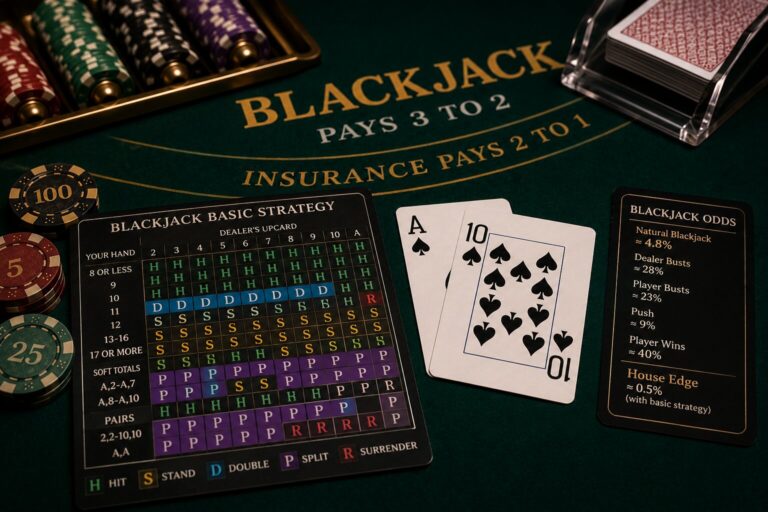
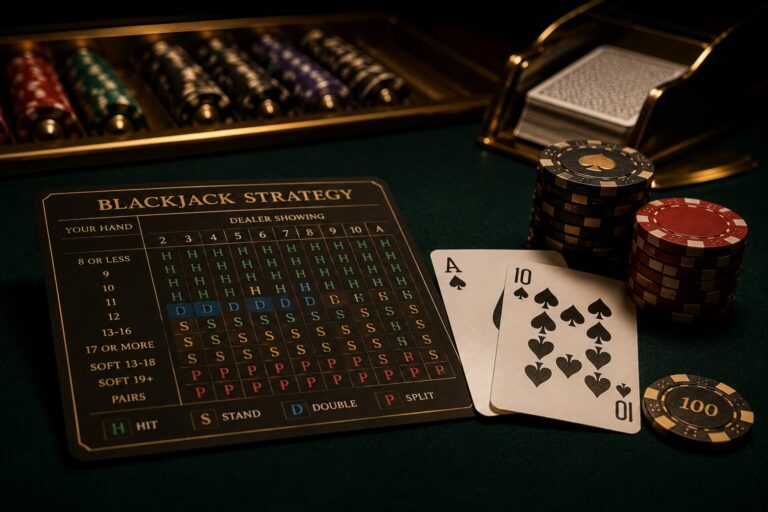
This is why when to hit or stand in blackjack is one of the most useful topics for new players. It teaches the habit of looking at both hands, not just your own total.
Standing Too Often Because You Fear Busting
Nobody likes busting. It feels immediate and frustrating.
However, avoiding busts at all costs is not good blackjack strategy. Sometimes standing on a weak total is worse than taking another card, even if hitting may lead to busting.
This is one of the hardest ideas for beginners to accept. A player may hit 16 against a dealer 10, draw a picture card, bust, and decide the hit was a mistake. But one result does not prove the decision was wrong.
Blackjack strategy is based on long-term expectation, not the outcome of one hand.
If you stand too often because you dislike busting, you may leave yourself with weak totals against strong dealer cards. That can quietly cost more over time.
Hitting When The Dealer Is Weak
The opposite mistake is also common.
Some players hit too aggressively even when the dealer shows a weak upcard. If the dealer has a 4, 5, or 6 showing, they may be more likely to bust than when showing a 10 or ace.
In those situations, standing on certain modest totals can make sense. You are not standing because your hand is excellent. You are standing because the dealer may be in a worse position.
Beginners often struggle with this because a hand like 13 or 14 does not feel strong. But blackjack strategy is not always about building the best-looking hand. Sometimes it is about letting the dealer complete a difficult one.
This is where using blackjack basic strategy for beginners can prevent emotional decisions.
Misusing Double Down
Doubling down is powerful, but only when used correctly.
A double down lets you increase your original bet, usually by the same amount, in exchange for receiving exactly one more card. It is often used when your starting hand has strong potential.
The mistake is treating double down as a gamble within a gamble.
Some players double because they are on a winning streak. Others double because they want to recover money quickly. Some double simply because they have a “feeling” that the next card will be good.
That is not strategy.
Doubling should be based on your hand, the dealer’s upcard, and the table rules. Used well, it can improve your overall position. Used badly, it increases the amount at risk in poor situations.
Splitting The Wrong Pairs
Splitting pairs is another area where beginners often go wrong.
Some pairs are commonly split because it creates a better situation. Splitting 8s is a standard example because a hard 16 is an awkward hand. Splitting aces is usually strong because each ace can become the start of a powerful hand.
But not every pair should be split.
Splitting 10s is usually a poor choice because a total of 20 is already very strong. Breaking it apart creates two uncertain hands from one excellent hand. Splitting 5s is also usually a mistake because 10 is a strong starting total for doubling.
The mistake is thinking of splitting as a way to create more chances. It should be treated as a strategic decision, not a way to make the game more exciting.
Taking Insurance Too Often
Insurance is one of the most misleading options in blackjack.
When the dealer shows an ace, players may be offered insurance. It sounds like a sensible way to protect the hand, but it is actually a separate side bet that the dealer has blackjack.
For most casual players, insurance is usually not good value. Unless you have reliable information about the remaining cards, it tends to favour the house.
The problem is the name. “Insurance” makes the bet sound safer than it really is. A player may take it because they are worried, not because the numbers support the decision.
Avoiding unnecessary insurance is one of the simplest ways to prevent extra losses.
Playing Too Many Side Bets
Modern blackjack tables often include side bets.
These may involve pairs, suited cards, perfect combinations, or other bonus outcomes. They can add variety, and some players enjoy them as entertainment. However, they often carry a higher house edge than the main blackjack game.
The mistake is thinking side bets are part of good blackjack strategy.
A player may follow basic strategy on the main hand but regularly place side bets that worsen the overall cost of play. Over time, these extra bets can have a bigger impact than the player realises.
That does not mean nobody should ever place a side bet. It means players should understand that side bets are usually higher-risk extras, not a way to improve the main game.
Using Betting Systems As A Strategy
Many blackjack players are attracted to betting systems.
A common example is increasing the stake after a loss, hoping that a later win will recover previous losses. Other systems involve raising bets after wins, using progressions, or dividing play into sessions.
The problem is that betting systems do not change the underlying odds of the game.
If a blackjack game has a house edge, changing your stake pattern does not remove it. It may change how results feel in the short term, but it does not turn a negative-expectation game into a positive one.
Progressive systems can also become risky quickly. A losing streak may force stakes higher than planned, or the table limit may stop the progression before recovery is possible.
Better blackjack play comes from better decisions, not from stake patterns alone.
Chasing Losses
Chasing losses is one of the most damaging mistakes in any casino game.
It happens when a player loses money and then increases stakes, plays longer, or takes bigger risks in an attempt to win it back.
Blackjack can make this tempting because the game moves quickly. A player may feel that one strong hand, one blackjack, or one double down could turn the session around.
Sometimes it might. But relying on that hope is risky.
A losing run does not make a win due. Cards do not balance themselves in the short term just because a player is behind.
Good bankroll control means deciding how much you are prepared to risk before playing and accepting that a losing session is possible.
Playing At Poor Rule Tables
Not all blackjack tables are equal.
One table may pay blackjack at 3:2. Another may pay 6:5. One table may allow doubling after splitting. Another may not. One dealer may stand on soft 17, while another game may require the dealer to hit soft 17.
These differences affect the house edge.
A beginner who ignores table rules may accidentally choose a worse game. Even if they play well, the conditions may be less favourable than they need to be.
This is especially important online, where multiple blackjack versions may sit side by side. The layout may look similar, but the rules can differ.
Understanding blackjack odds when playing by the book means understanding both your decisions and the rules of the game you choose.
Copying Other Players
At a blackjack table, it is easy to assume that confident players know what they are doing.
They may use technical language, criticise other decisions, or act quickly. But confidence is not the same as correctness.
Copying other players can be a mistake because their strategy may be poor. They may also be playing with different goals, different risk tolerance, or no real structure at all.
Another problem is blaming other players for the cards. Some players believe another person “took the dealer’s bust card” or “ruined the shoe”. In reality, you cannot know whether a different decision would have helped or hurt.
A better approach is to learn your own strategy and ignore table pressure.
Believing Short-Term Results Prove The Strategy
Short-term blackjack results can be misleading.
A bad decision can win. A good decision can lose. This happens all the time.
For example, a player might split 10s and win both hands. That does not automatically make the decision good. Another player might hit correctly and bust. That does not automatically make the decision bad.
The mistake is judging strategy only by the immediate outcome.
Blackjack decisions should be evaluated over many hands. The aim is not to win every individual hand, because that is impossible. The aim is to make decisions that are stronger over time.
This mindset is essential if you want to understand evening the odds at blackjack in a realistic way.
Overestimating Card Counting
Card counting is real, but it is also widely misunderstood.
Some players believe that learning a simple count automatically makes blackjack profitable. In practice, successful card counting requires skill, concentration, suitable rules, good deck penetration, disciplined bet sizing, and the ability to avoid casino attention.
It is also not practical in many online blackjack games, especially those that shuffle after every hand.
The mistake is treating card counting as an easy shortcut. For most casual players, the more useful goal is to learn basic strategy, choose better rules, and manage risk.
Card counting belongs more naturally in discussions of professional blackjack players and how they win, not beginner-level casino play.
Thinking Blackjack Is A Reliable Way To Make Money
Because blackjack involves skill, some players treat it differently from other casino games.
They may believe that if they learn enough strategy, the game can become a steady source of income. For ordinary players in ordinary casino conditions, this is not realistic.
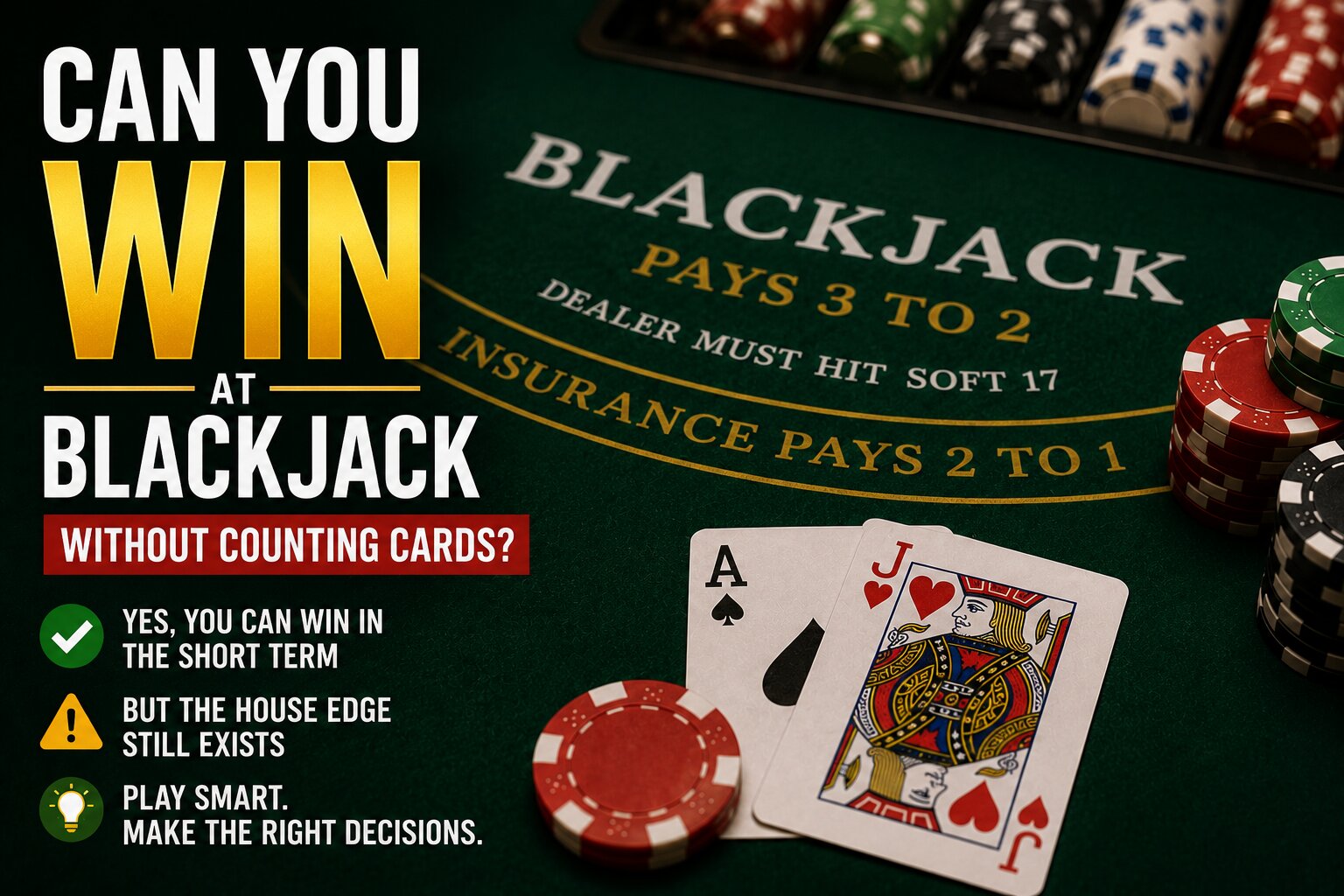
Blackjack has a lower house edge than many games when played well, but a lower edge is not the same as no edge. The casino still has a mathematical advantage in most standard games.
This is part of how online casinos make their money. They rely on rules, volume, margins, and player behaviour over time.
A responsible player treats blackjack as entertainment, not as a financial plan.
Ignoring The Pace Of Online Blackjack
Online blackjack can be much faster than a land-based table.
This creates another mistake: playing more hands than intended. Even if the stake per hand is modest, fast gameplay can increase total wagering quickly.
Live dealer blackjack is usually slower, but standard digital blackjack can move at a rapid pace. Players may not notice how many hands they have played until the session is already well beyond what they planned.
The solution is to set limits before starting. Decide the budget, stake size, and session length in advance.
Speed does not change the rules, but it can change how quickly losses or wins develop.
Forgetting That Discipline Matters
Blackjack knowledge is useful, but only if applied consistently.
A player may know basic strategy but ignore it after a few losses. They may understand bankroll limits but extend the session. They may know insurance is poor value but take it when nervous.
The mistake is assuming knowledge alone is enough.
Discipline is what turns knowledge into practice. That means sticking to a plan, accepting variance, avoiding emotional decisions, and stopping when your limit is reached.
This is not exciting advice, but it is important. Most blackjack mistakes are not complicated. They come from impatience, fear, overconfidence, or misunderstanding risk.
Guest Posts On Blackjack And Casino Player Education
Lucky252Casinos welcomes clear, responsible guest posts from writers who can explain blackjack, casino strategy, common player mistakes, and wider iGaming topics in a practical way. We are interested in articles that help readers make sense of casino games without encouraging unrealistic expectations or risky gambling habits.
Interested in taking the chance to write for us on casino games? Get in touch!
What Beginners Should Remember
Most blackjack mistakes come from treating the game as simpler than it really is.
The rules are easy to learn, but good decisions require structure. You need to understand the dealer’s upcard, the difference between hard and soft hands, when to hit or stand, when to double, when to split, and why side bets can be poor value.
You also need realistic expectations.
Avoiding mistakes does not guarantee winning. It simply helps you avoid making the casino’s edge larger than it already is. A good player can still lose, and a poor player can still win in the short term.
The aim is not to control the cards. You cannot. The aim is to control your decisions, your stakes, and your response to variance.
That is the practical difference between guessing at blackjack and playing it with a clearer plan.