Blackjack Rules: How They Work
Blackjack is one of the easiest casino games to recognise, but it can still feel confusing when you first sit down to play. The table has its own rhythm, the dealer follows fixed procedures, and players have several choices to make on almost every hand.
The good news is that blackjack rules are not difficult once you break them down. The basic aim is simple: try to finish with a stronger hand than the dealer without going over 21.
That last part is important. Blackjack is not about getting as close to 21 as possible at any cost. It is about making better decisions than simply guessing, while remembering that the dealer also has rules to follow. Understanding those rules is the first step before looking at blackjack basic strategy for beginners, betting systems, odds, or more advanced ideas.
This guide explains how blackjack works, what the cards mean, what choices players usually have, and how a typical hand plays out.
The Basic Aim Of Blackjack
In blackjack, you are playing against the dealer, not against the other players at the table.
Each player has their own hand. The dealer has a separate hand. Your goal is to beat the dealer by either:
getting a higher total than the dealer without going over 21
having the dealer go over 21 while your hand stays live
being dealt a natural blackjack when the dealer does not also have one
If your hand goes over 21, this is called going bust. When that happens, your hand loses immediately, even if the dealer later goes bust as well.
This is one of the most important blackjack rules to understand. The player acts first, which means the player can lose before the dealer has to complete their hand.
Card Values In Blackjack
Blackjack card values are simple.
Number cards are worth their face value. A 2 is worth 2, a 7 is worth 7, and so on.
Picture cards are worth 10. This includes jacks, queens, and kings.
Aces can be worth either 1 or 11, depending on what helps the hand.
This flexible ace value is one reason blackjack has more decision-making than many other casino games. For example, an ace and a 6 can be counted as either 7 or 17. A hand like this is called a soft hand because it cannot bust from taking one extra card.
By contrast, a hand such as 10 and 7 is a hard 17. There is no ace being counted as 11, so taking another card could easily make the hand go over 21.
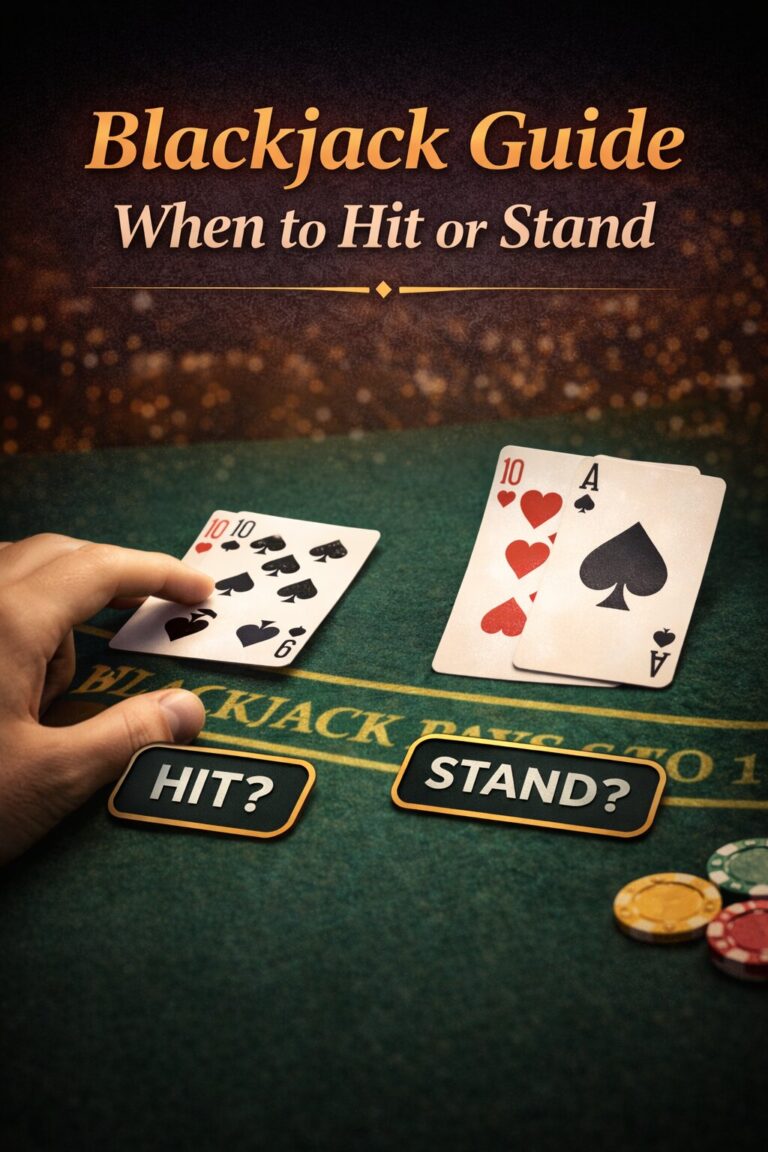
Soft and hard hands matter because they affect the correct playing decision. This is why many beginners eventually look at when to hit or stand in blackjack after learning the basic rules.
What Is A Blackjack?
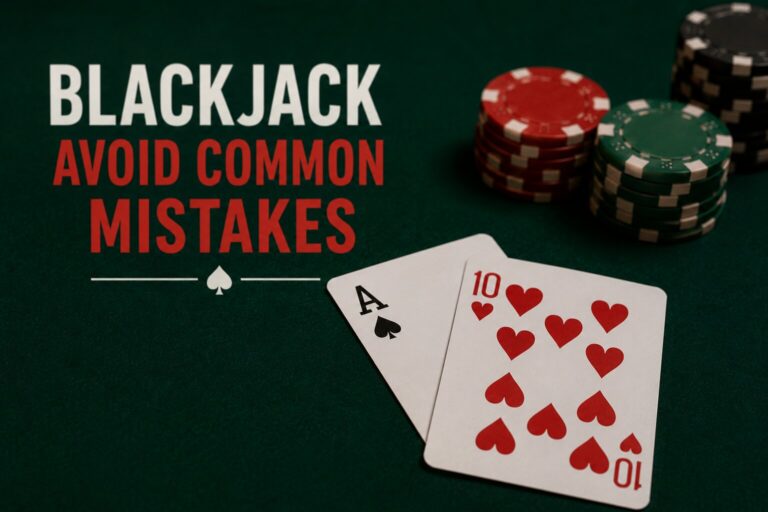
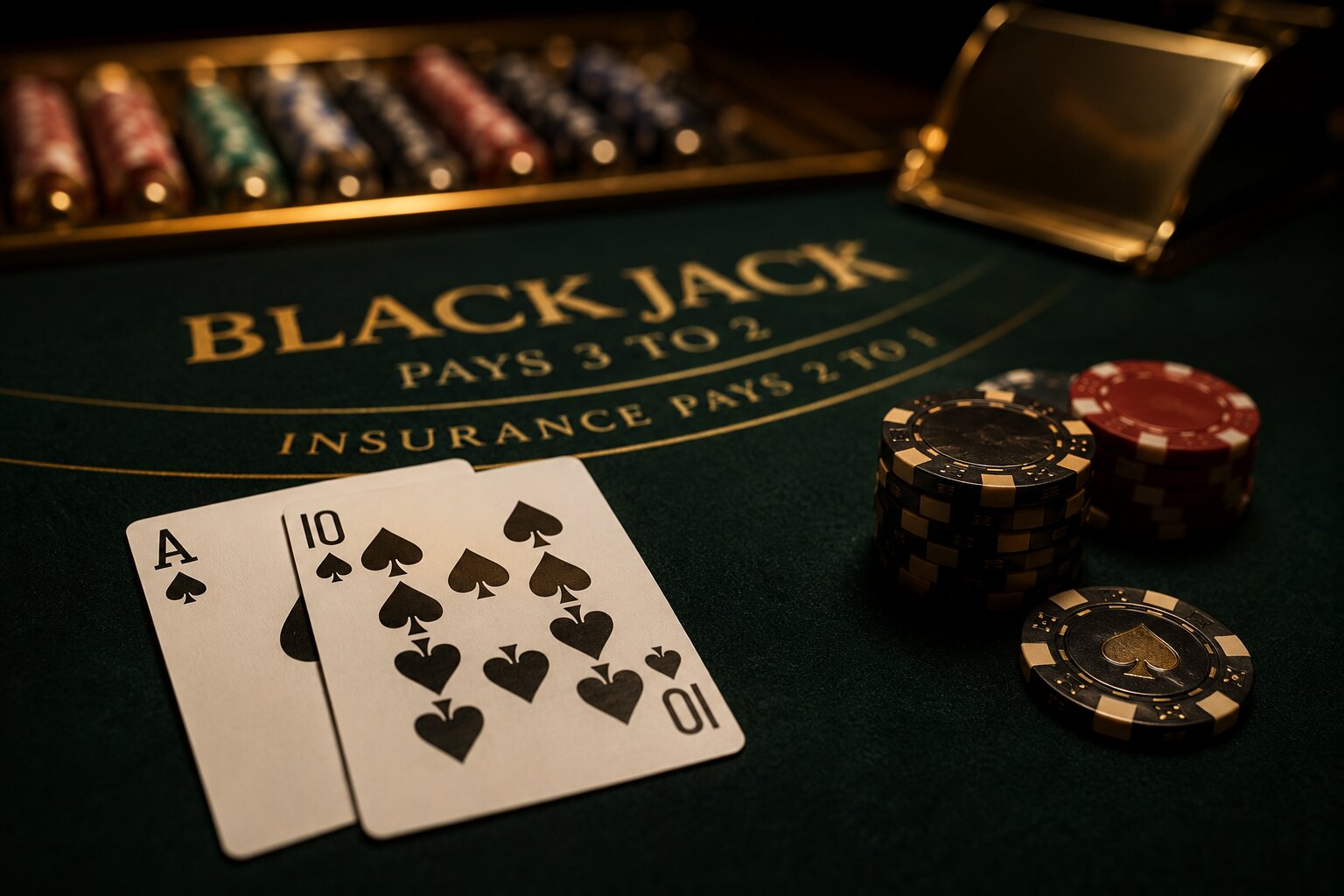
A blackjack is a two-card hand worth 21. It must contain an ace and a 10-value card.
For example:
ace and king
ace and queen
ace and jack
ace and 10
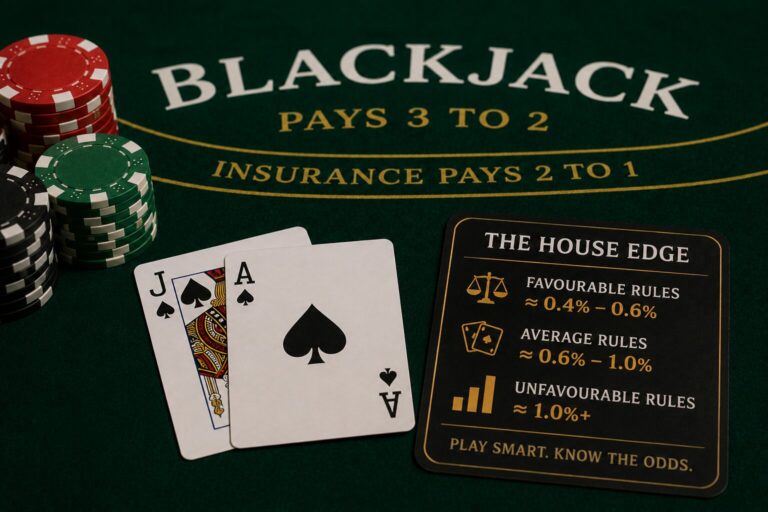
A blackjack is usually the best possible starting hand. In most games, it pays more than a normal winning hand. The traditional payout is 3:2, although some casinos offer 6:5 instead.
This difference matters. A 3:2 blackjack payout is better for the player than 6:5. If you are comparing games, payout rules are one of the first things to check.
A blackjack usually beats any ordinary hand of 21 made with three or more cards. However, if both the player and the dealer have blackjack, the result is normally a push, meaning the original stake is returned.
How A Blackjack Hand Starts
A standard blackjack round begins with players placing their bets.
Once bets are placed, the dealer gives each player two cards. The dealer also receives two cards, although one of the dealer’s cards is usually face up and the other is face down in many versions of the game.
The face-up dealer card is important because it gives players information. A dealer showing a 6 is in a very different position from a dealer showing an ace or 10-value card.
After the initial deal, each player decides how to play their hand. The available decisions usually include hit, stand, double down, split, and sometimes surrender.
The exact options depend on the rules of the table.
Hit: Taking Another Card
To hit means to take another card.
Players usually hit when their hand is weak or when standing would leave them unlikely to beat the dealer. For example, if you have a total of 8, hitting is usually obvious because you cannot bust with one extra card.
The risk increases as your total gets higher. If you have 16, any 6, 7, 8, 9, 10, or picture card will make you bust. That does not always mean standing is better, but it shows why blackjack decisions can feel uncomfortable.
Many beginner mistakes come from hitting or standing based on instinct alone. A better approach is to learn how hand totals interact with the dealer’s upcard, which is covered more fully in guides to common blackjack strategies.
Stand: Keeping Your Current Hand
To stand means you do not want any more cards.
Once you stand, your hand total is locked in. The dealer will then continue the round after all players have acted.
Players often stand when they have a strong total, such as 19 or 20. They may also stand on lower totals when the dealer is showing a weak card and is more likely to bust.
For example, many standard blackjack strategy charts recommend standing on hard 12 through 16 when the dealer shows certain weak cards. That can feel strange to beginners because the player’s hand is not especially strong. The reason is that the dealer may be in a worse position.
This is where blackjack becomes more than just trying to reach 21. You are making decisions based on both your hand and the dealer’s visible card.
Double Down: Increasing The Bet
Doubling down allows you to increase your original bet, usually by placing an equal additional bet. In return, you receive exactly one more card.
This can be a powerful option when your starting hand has a strong chance of improving. A common example is a total of 11, because many cards can turn it into a strong final hand.
However, doubling down also increases risk. You are putting more money into the hand and giving up the chance to take further cards.
Different tables have different double down rules. Some allow doubling on any two cards. Others restrict it to certain totals, such as 9, 10, or 11. Some games also allow doubling after splitting, which can be favourable for the player.
Before playing, it is sensible to check the table rules rather than assuming every blackjack game works the same way.
Split: Turning A Pair Into Two Hands
If your first two cards are the same value, you may be allowed to split them.
Splitting creates two separate hands. You place an additional bet equal to your original stake, and each card becomes the first card of a new hand.
For example, if you are dealt two 8s, you can split them into two hands. Each 8 then receives another card.
Splitting can help you escape weak totals or take advantage of strong situations. Two 8s make 16, which is usually an awkward hand. Splitting gives you two separate starting points instead.
However, not every pair should be split. Splitting 10s, for example, is usually considered a poor decision because 20 is already a very strong hand.
Rules for splitting vary. Some tables let you re-split pairs. Some restrict how split aces are played. Some allow doubling after a split, while others do not.
These rule differences affect blackjack odds if you play by the book, so they are worth noticing.
Surrender: Giving Up Half The Bet
Some blackjack games offer surrender.
Surrender allows you to give up the hand and lose only half your bet. This option is usually available only as the first decision after the initial deal.
It is not offered at every table, and some online blackjack games do not include it. When it is available, surrender can be useful in a few poor situations, such as certain hard 16 hands against a very strong dealer upcard.
Beginners often ignore surrender because it feels like admitting defeat. In reality, it is just another rule that can reduce losses in specific situations.
Insurance: A Side Bet Against Dealer Blackjack
When the dealer shows an ace, many blackjack games offer insurance.
Insurance is a separate side bet that the dealer has blackjack. If the dealer does have blackjack, the insurance bet usually pays 2:1. If the dealer does not have blackjack, the insurance bet loses and the hand continues.
Although insurance can sound protective, it is generally not recommended for casual players. It is a separate wager with its own house edge, and it is not the same as insuring your hand in a practical sense.
This is a good example of why blackjack rules should be understood carefully. Some options sound helpful but are not always good value.
The Dealer’s Rules
Unlike players, the dealer does not choose freely how to play.
The dealer must follow fixed house rules. Usually, the dealer must hit until reaching at least 17. Once the dealer reaches 17 or higher, they normally stand.
One important rule variation is whether the dealer hits or stands on soft 17. A soft 17 is a hand such as ace and 6, which can count as either 7 or 17.
If the dealer stands on soft 17, this is usually better for the player. If the dealer hits soft 17, this usually improves the casino’s position slightly.
This connects directly to blackjack and the house edge, because small rule differences can change the long-term cost of the game.
How A Round Is Settled
After all players have completed their decisions, the dealer reveals the face-down card and plays according to the dealer rules.
The possible outcomes are straightforward.
If you bust, you lose.
If the dealer busts and you have not busted, you win.
If neither hand busts, the higher total wins.
If your total equals the dealer’s total, it is a push and your original bet is returned.
If you have blackjack and the dealer does not, you usually receive the blackjack payout.
If the dealer has blackjack and you do not, you lose your original bet unless a special rule applies.
The settlement process is quick once you understand it, but beginners can sometimes lose track because several players may be acting at the same table.
Common Blackjack Table Rules To Check
Not every blackjack game uses identical rules. Before playing, it is useful to check the table information.
Important rules include:
how much blackjack pays
whether the dealer hits or stands on soft 17
how many decks are used
whether doubling is allowed on any two cards
whether doubling after splitting is allowed
whether surrender is available
how many times pairs can be split
how split aces are handled
These may sound like small details, but they affect the quality of the game. A beginner does not need to memorise every rule variation immediately, but they should understand that blackjack is not one single fixed product everywhere.
This is also why live casino blackjack, online blackjack, and land-based casino blackjack can feel slightly different even when the core game is the same.
Blackjack In Online Casinos
Online blackjack usually follows the same basic rules as casino blackjack, but the format may differ.
In standard digital blackjack, the game is run by software. Cards are dealt instantly, and players make decisions using buttons. The game rules are usually shown in an information panel.
In live dealer blackjack, a real dealer runs the game through a video stream. Players join remotely and make decisions on screen. The pace may be closer to a physical casino table.
Both versions still rely on the same core ideas: card totals, dealer rules, player decisions, and payouts. However, table limits, side bets, timing rules, and available decisions may vary.
For beginners who want the full practical process, how to play blackjack at a casino is the natural next topic after learning the basic rules.
Is Blackjack A Game Of Skill Or Chance?
Blackjack includes both chance and decision-making.
You cannot control which cards are dealt. The order of the cards is uncertain, and short-term results can be unpredictable. Even a good decision can lose, and a poor decision can sometimes win.
However, blackjack is not purely random from the player’s point of view. Player decisions affect the expected result over time. Hitting, standing, doubling, and splitting correctly can reduce the casino’s mathematical advantage.
That does not mean blackjack becomes a guaranteed way to make money. The house still has an edge in normal casino conditions. But compared with games where the player has no meaningful choices, blackjack gives players more control over how they approach each hand.
Why Basic Strategy Matters
Basic strategy is a mathematically informed way to play blackjack hands. It tells players the recommended move based on their hand and the dealer’s upcard.
It does not guarantee a win on any individual hand. Instead, it helps reduce avoidable mistakes over many hands.
For example, basic strategy may tell you to hit a hard 16 against a dealer 10, even though the risk of busting feels high. The reason is that standing is usually expected to lose more often in that situation.
This is the part of blackjack that often surprises beginners. The best move is not always the move that feels safest.
Learning rules first makes basic strategy easier to understand. Once you know what hit, stand, double, split, and surrender mean, the strategy chart starts to make more sense.
Common Beginner Misunderstandings
One common misunderstanding is that the aim is always to get as close to 21 as possible. In reality, the aim is to beat the dealer without busting.
Another misunderstanding is that other players can ruin your hand. In standard blackjack, other players’ decisions may change the order of cards, but you cannot know whether that helps or hurts you. Blaming other players is not a useful way to think about the game.
Some players also believe that a hand is “due” to win after several losses. Blackjack does not work that way. Previous hands do not make the next hand more likely to win.
These misunderstandings are covered more fully in blackjack mistakes that you should look to avoid, but they are worth mentioning early because they affect how beginners approach the table.
Responsible Ways To Approach Blackjack
Blackjack should be treated as paid entertainment, not as income.
Even when played carefully, it remains a casino game with risk. The house edge may be lower than in some other games when rules are favourable and decisions are sound, but it does not disappear for ordinary players.
A sensible approach includes setting a budget before playing, choosing stakes that fit that budget, understanding the rules before betting, and avoiding emotional decisions after wins or losses.
It is also sensible to avoid chasing losses. A losing run does not mean a winning run must follow. Variance is part of the game, and short-term results can move sharply in either direction.
Guest Posts On Blackjack And Casino Guides
Lucky252Casinos welcomes clear, informative guest posts from writers with experience in blackjack, casino rules, player education, or wider iGaming topics. Contributions should help readers understand games responsibly, explain practical concepts in plain language, and avoid exaggerated claims about gambling outcomes.
A Clear Way To Understand Blackjack Rules
Blackjack rules are easier to learn when you separate the game into stages.
First, understand the aim: beat the dealer without going over 21. Then learn the card values, including how aces work. After that, focus on the main decisions: hit, stand, double down, split, and sometimes surrender.
Once those basics are clear, the rest of the game becomes easier to follow. Dealer rules, blackjack payouts, table variations, and strategy charts all build on the same foundation.
For beginners, the best next step is not to memorise every advanced tactic immediately. It is to understand how each rule affects the hand in front of you. From there, blackjack becomes a more structured game, with clearer decisions and fewer guesses.