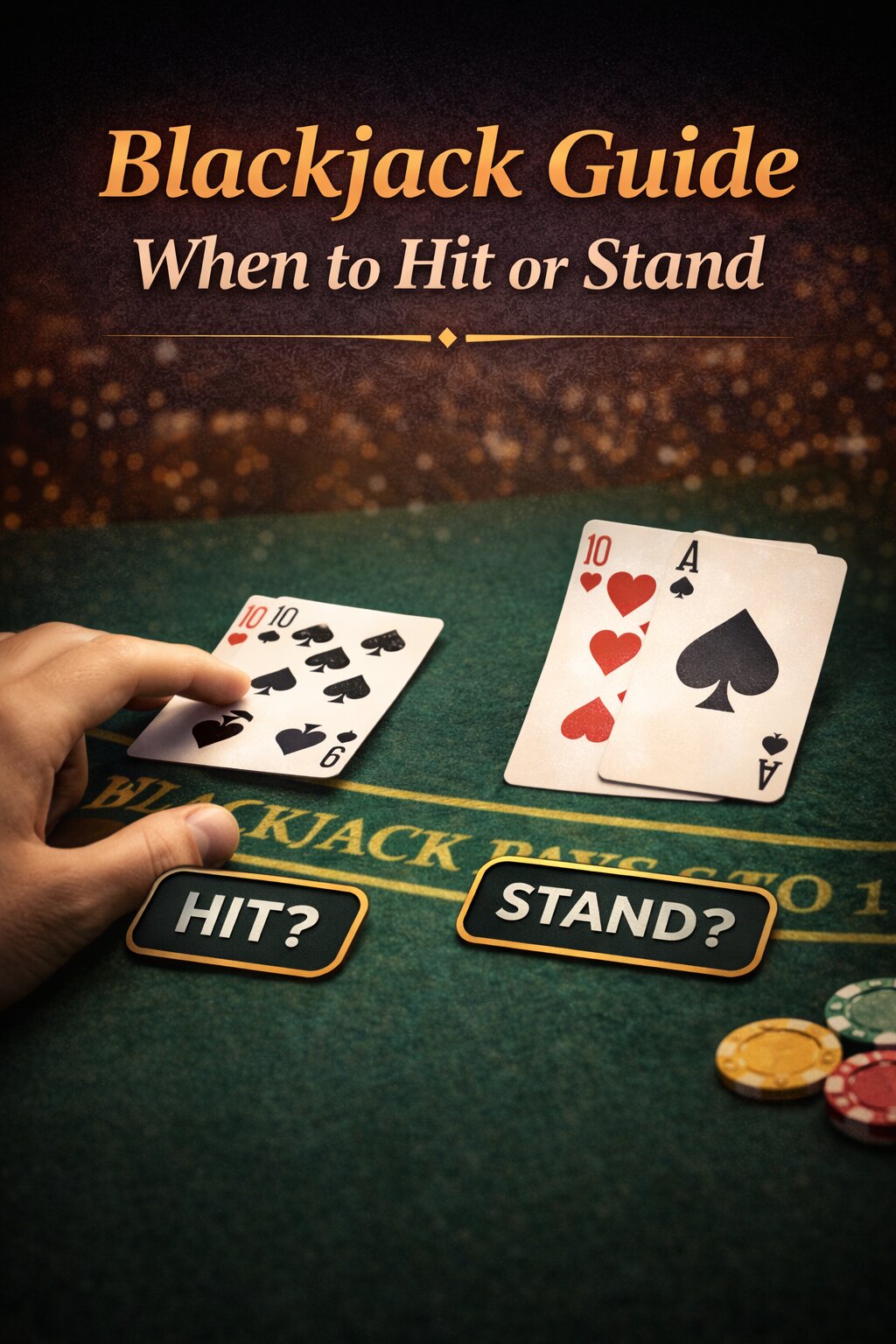
Blackjack Guide: When to Hit or Stand
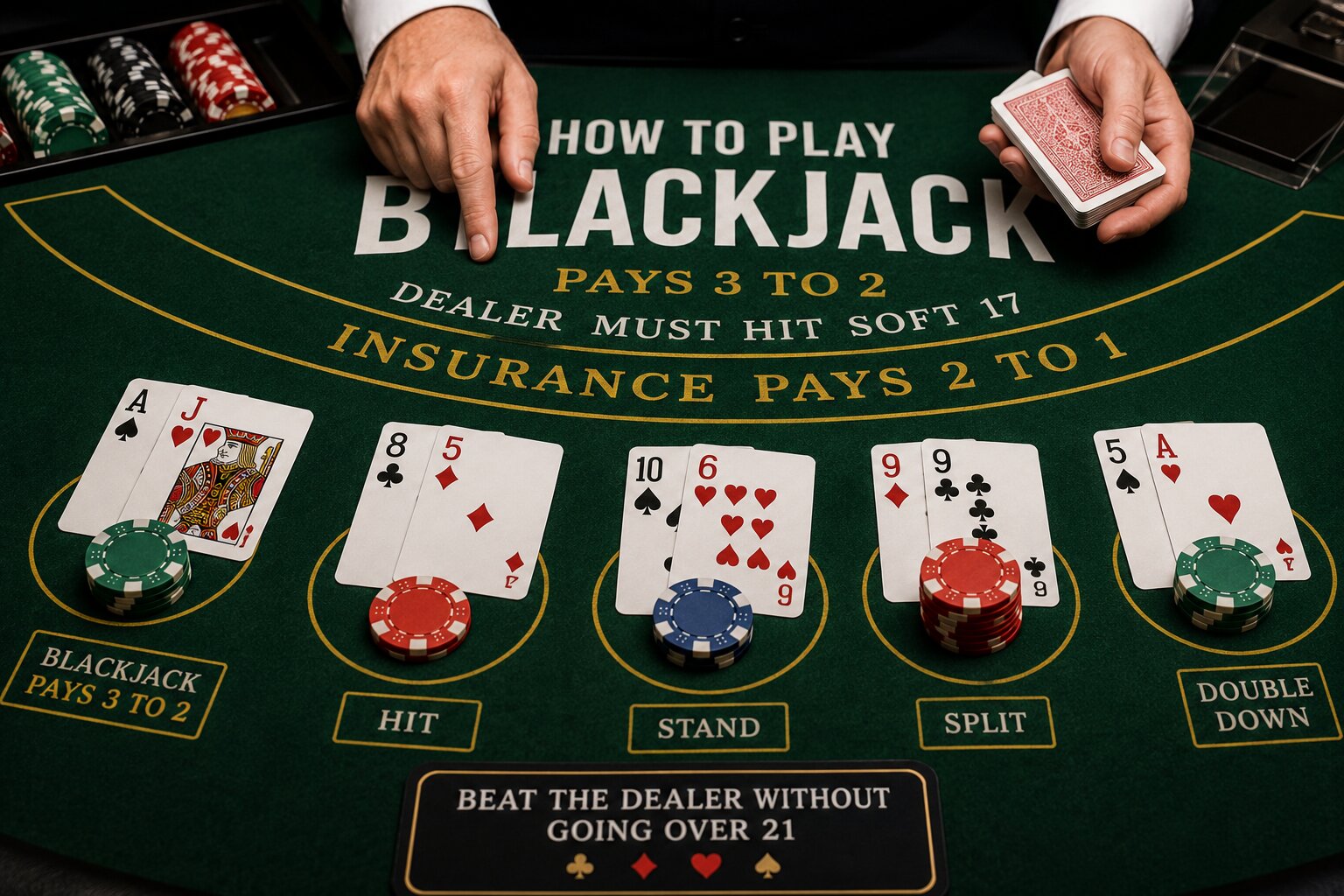
Blackjack is often described as a simple game to learn but a difficult one to master. At its core, the objective is straightforward: get closer to 21 than the dealer without going over. But once the cards are on the table, players quickly realise that the real challenge lies in decision-making.
One of the most important decisions in blackjack is knowing when to hit and when to stand.
For beginners, this can feel like guesswork. Should you take another card on 16? Is 12 a safe place to stop? What if the dealer has a strong card showing?
This guide breaks down the logic behind hitting and standing in blackjack. Instead of relying on instinct or superstition, we will explain how these decisions work, why they matter, and how beginners can approach them with more confidence.
What Does “Hit” and “Stand” Mean?
Before getting into strategy, it is worth clarifying the basics.
- Hit means taking another card to increase your total
- Stand means keeping your current hand and ending your turn
After you stand, the dealer continues the hand according to fixed rules.
Every blackjack hand eventually comes down to this decision: do you take another card, or do you stop where you are?
The Goal Behind Every Decision
The goal in blackjack is not just to avoid going over 21. It is to beat the dealer.
This distinction is important.
Many beginners focus only on not busting. While avoiding busting matters, standing on a weak hand often leads to losing anyway because the dealer is likely to reach a higher total.
So every decision to hit or stand should be based on two things:
- your current hand
- the dealer’s visible card
This is the foundation of blackjack strategy.
Understanding Hard and Soft Hands
Before deciding when to hit or stand, you need to understand the difference between hard and soft hands.
Hard hands
A hard hand does not include an ace counted as 11.
Examples:
- 10 + 6 = hard 16
- 9 + 7 = hard 16
These hands are less flexible because taking another card can easily cause a bust.
Soft hands
A soft hand includes an ace counted as 11.
Examples:
- ace + 6 = soft 17
- ace + 7 = soft 18
These hands are more flexible because the ace can change from 11 to 1 if needed.
This flexibility often affects whether you should hit or stand.
When You Should Usually Hit
Hitting is generally the right choice when your hand is too weak to compete with the dealer.
Low totals (8 or less)
If your total is 8 or below, you will almost always hit.
There is no realistic way to win with such a low total, and the risk of busting is minimal.
Hard 9 to 11
With totals like 9, 10, or 11, you will often hit (or sometimes double down, depending on the situation).
These are strong starting points that can improve significantly with one more card.
Hard 12 to 16 against strong dealer cards
This is one of the most important areas for beginners.
If you have a total between 12 and 16, and the dealer shows a strong card (7 through ace), you will often need to hit.
Even though there is a risk of busting, standing on a weak total against a strong dealer card usually leads to losing.
This is where many beginners hesitate, but basic strategy often favours hitting in these situations.
When You Should Usually Stand
Standing is the right choice when your hand is strong enough or when hitting creates too much unnecessary risk.
Hard 17 or higher
If you have 17 or more, you will usually stand.
The risk of busting is high, and your hand is already strong enough to compete.
Hard 12 to 16 against weak dealer cards
If the dealer shows a weak card (4, 5, or 6), the situation changes.
In these cases, the dealer is more likely to bust.
This means you can often stand on totals like 12, 13, 14, 15, or 16 and let the dealer take the risk.
This is a key concept in blackjack: sometimes the best move is to do nothing and let the dealer’s position work against them.
The Importance of the Dealer’s Upcard
The dealer’s visible card is one of the most important factors in deciding whether to hit or stand.
Weak dealer cards (4, 5, 6)
These are considered weak because the dealer has a higher chance of busting.
When the dealer shows one of these cards, you can often play more conservatively.
Strong dealer cards (7, 8, 9, 10, ace)
These are strong because the dealer has a better chance of reaching a high total.
When the dealer shows these cards, you often need to play more aggressively and improve your hand.
Understanding this difference helps explain why the same player hand can be played differently depending on the situation.
Soft Hands: A Different Approach
Soft hands are more flexible, which changes how you approach them.
Soft 17 or lower
Hands like ace + 5 or ace + 6 are usually hit.
Even though the total may look reasonable, the flexibility of the ace means there is room to improve without much risk.
Soft 18
Soft 18 is a more complex hand.
- against weak dealer cards, you may stand
- against stronger dealer cards, you may need to hit
This is a good example of how blackjack decisions depend on both sides of the table.
Soft 19 or higher
With soft 19 or higher, you will usually stand.
These are strong hands that do not need improvement.
Why Hitting on “Risky” Hands Can Be Correct
One of the hardest adjustments for beginners is understanding why hitting on hands like 15 or 16 can be the right decision.
It feels uncomfortable because there is a real chance of busting.
However, the key question is not “what might happen if I hit?” but “what happens if I stand?”
If you stand on 16 against a dealer 10, you are likely to lose anyway because the dealer has a strong position.
Hitting may result in a bust, but it also gives you a chance to improve your hand.
This is one of the core ideas in blackjack: sometimes the “safer” option is actually worse in the long run.
Common Mistakes Beginners Make
Understanding when to hit or stand becomes easier once you recognise common mistakes.
Standing too often
Many beginners stand on weak hands because they want to avoid busting. This often leads to losing against stronger dealer totals.
Ignoring the dealer’s card
Some players focus only on their own total and forget that the dealer’s position is just as important.
Treating all 17s the same
A hard 17 and a soft 17 are very different hands. Soft hands offer more flexibility.
Guessing instead of using logic
Blackjack decisions are based on probability. Guessing leads to inconsistent results.
A Simple Way to Think About It
For beginners, it helps to simplify the decision process.
Ask yourself two questions:
- Is my hand strong enough to beat the dealer?
- Is the dealer in a strong or weak position?
If your hand is weak and the dealer is strong, you usually need to hit.
If your hand is decent and the dealer is weak, you can often stand.
This is not a full strategy chart, but it is a practical way to think through decisions.
Does This Guarantee Better Results?
No. Even if you always make the correct decision, blackjack outcomes are still influenced by chance.
You can play perfectly and lose in the short term, or make mistakes and win occasionally.
The value of learning when to hit or stand is not about guaranteeing wins. It is about making better decisions over time and avoiding unnecessary losses.
Learning Through Practice
The best way to improve is through practice.
Online blackjack can be useful because:
- you can play at your own pace
- there is less pressure than a live table
- you can refer to strategy guides while playing
Over time, the decisions start to feel more natural.
Building Confidence at the Table
For new players, confidence often comes from understanding rather than experience alone.
Once you know why certain decisions are recommended, the game becomes less intimidating.
Instead of reacting emotionally, you begin to follow a consistent approach.
That makes blackjack feel more structured and less unpredictable.
A Smarter Way to Approach Hit or Stand Decisions
Knowing when to hit or stand is one of the most important skills in blackjack.
It is not about memorising every possible situation immediately. It is about understanding the logic behind the decisions.
By focusing on:
- your hand total
- whether the hand is hard or soft
- the dealer’s upcard
you can make more informed choices.
Blackjack will always involve an element of chance, but better decisions create a more controlled and consistent playing experience.
For beginners, that is the real advantage: not eliminating risk, but understanding it well enough to play with confidence and clarity.