
What Are The Most Common Blackjack Strategies?
Blackjack is one of the few casino games where player decisions have a real effect on the outcome over time. You cannot control the cards, and you cannot remove the casino’s advantage completely in ordinary play, but you can make better or worse choices on each hand.
That is why blackjack strategy matters.
A beginner who guesses, follows hunches, or copies other players may still win some hands in the short term. Blackjack has plenty of variance, so anything can happen over a small number of rounds. However, over a longer period, poor decisions tend to cost more money than careful ones.
The most common blackjack strategies are designed to bring structure to the game. Some are sensible and widely used. Others are misunderstood, overpromoted, or risky when used without context.
This guide explains the main blackjack strategies beginners are likely to hear about, what they are trying to achieve, and where their limits are.
Start With The Rules Before Strategy
Before looking at blackjack strategies, it is important to understand the rules of the game itself.
A strategy only makes sense if you know what options are available. Hitting, standing, doubling down, splitting, surrendering, and taking insurance all mean different things. They also affect the hand in different ways.
For example, doubling down is not just “betting more”. It means increasing the stake in exchange for receiving exactly one more card. Splitting is not simply creating more action. It turns one paired hand into two separate hands, each with its own risk and potential result.
If you are still unsure about those basics, it is worth reviewing blackjack rules explained before trying to use any strategy system. Strategy works best when it is built on a clear understanding of how the game is dealt and settled.
Basic Strategy
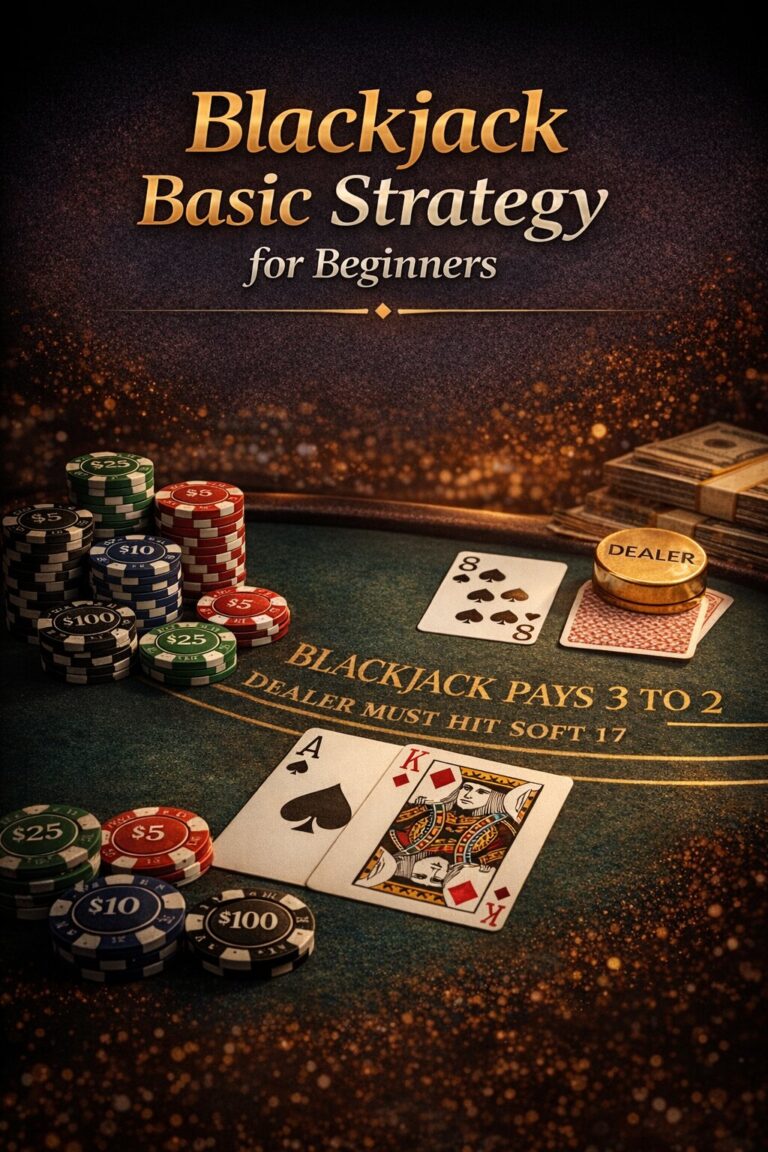
Basic strategy is the most important blackjack strategy for beginners.
It is not a betting system. It does not tell you when a win is “due”. It does not guarantee profit. Instead, it tells you the mathematically recommended decision for each hand, based on your cards and the dealer’s visible card.
A basic strategy chart normally shows whether you should hit, stand, double down, split, or surrender in different situations.
For example, basic strategy might recommend standing on a hard 16 against a dealer 6, but hitting a hard 16 against a dealer 10. To a new player, that can feel inconsistent. In reality, the dealer’s upcard changes the situation.
When the dealer shows a weak card, such as 5 or 6, they are more likely to run into difficulty when completing the hand. When the dealer shows a strong card, such as 10 or ace, the player often needs to take more risk.
This is the foundation of blackjack basic strategy for beginners. It reduces guesswork and helps players avoid the most costly decisions.
Why Basic Strategy Is Not A Winning Guarantee
Basic strategy improves the way you play, but it does not turn blackjack into a guaranteed winning game.
This is a key point. Many beginners hear that blackjack has a low house edge and assume that good strategy makes the player favoured. In normal casino conditions, that is not usually true.
Basic strategy reduces the house edge. It does not remove it entirely. The casino still has structural advantages, including the fact that players act before the dealer. If your hand busts, you lose immediately, even if the dealer would later have gone bust too.
This is why responsible blackjack guides separate good decision-making from unrealistic expectations. You can play better. You can reduce avoidable mistakes. But you should not treat blackjack as a reliable way to make money.
A useful next step after learning basic strategy is understanding blackjack and the house edge, because it explains why the casino still has a mathematical advantage even when players make strong decisions.
Hit And Stand Strategy
The most common blackjack decisions are whether to hit or stand.
To hit means to take another card. To stand means to keep your current total and end your turn.
Beginners often stand too early because they are afraid of busting. This is understandable, especially with totals such as 15 or 16. However, standing on a weak total against a strong dealer card can be worse than taking the risk of another card.
For example, if you have 16 and the dealer shows a 10, standing often leaves you in a poor position. The dealer already has a strong visible card, and there is a good chance their final hand will beat you. Hitting may feel dangerous, but it may still be the better long-term play.
On the other hand, if the dealer shows a 5 or 6, standing on certain weaker totals can make sense because the dealer has more bust potential.
This is why learning when to hit or stand in blackjack is one of the most practical early steps for any new player.
Doubling Down Strategy
Doubling down is one of the most powerful blackjack moves when used correctly.
It allows you to increase your original bet, usually by the same amount, in return for receiving just one more card. The idea is to put more money into the pot when your starting hand is in a favourable position.
A common example is doubling down on 11. With 11, many 10-value cards can give you a total of 21. Since 10s, jacks, queens, and kings all count as 10, there are many helpful cards in the deck.
Players may also double on totals such as 9 or 10 in certain situations, depending on the dealer’s upcard and the specific rules of the table.
The mistake is doubling just because a hand “feels lucky”. A proper doubling strategy looks at both your total and the dealer’s visible card. If the dealer is showing a strong card, doubling can become much less attractive.
Table rules also matter. Some games allow doubling on any first two cards. Others limit doubling to certain totals. Some allow doubling after splitting, which can improve the value of the game for the player.
Splitting Pairs Strategy
Splitting pairs is another common blackjack strategy, but it is often misunderstood.
When you are dealt two cards of the same value, you may be allowed to split them into two separate hands. You place an extra bet, and each card starts a new hand.
Some splits are widely recommended. A classic example is splitting 8s. Two 8s create a hard 16, which is one of the most awkward blackjack hands. Splitting gives you two separate hands starting from 8 instead of being stuck with 16.
Aces are also commonly split because an ace is a strong starting card.
However, not all pairs should be split. Many beginners split 10s because they like the idea of creating two strong hands. In most cases, this is a mistake. A total of 20 is already very strong, and breaking it apart usually reduces the strength of the position.
Splitting strategy depends on the dealer’s upcard and the table rules. Restrictions on split aces, re-splitting, and doubling after splits can all affect the correct decision.
Soft Hand Strategy
A soft hand is a hand containing an ace that can still be counted as 11 without busting.
For example, ace and 6 can be counted as 17 or 7. This is called soft 17.
Soft hands give players more flexibility because they are less likely to bust when taking another card. This changes the strategy. A beginner may see soft 18 and think it is always strong enough to stand, but that is not always the recommended move.
In some situations, soft 18 may be a double down, a stand, or even a hit, depending on the dealer’s upcard and table rules.
Soft hand strategy is one of the areas where basic strategy helps most. Without a chart or proper understanding, it is easy to treat all 17s or 18s the same. In blackjack, the difference between soft and hard totals can be significant.
Hard Hand Strategy
A hard hand does not contain an ace counted as 11.
Hard hands are less flexible because taking another card can cause the hand to bust. A hard 16, for example, is very different from a soft 16.
Hard hand strategy often feels uncomfortable because many decisions involve choosing between two bad-looking options. Hitting a hard 16 against a dealer 10 feels risky, but standing may be worse. Standing on 13 against a dealer 6 can feel weak, but the dealer’s poor upcard makes it more reasonable.
This is where beginners often make emotional choices. They remember the last time they hit 16 and busted, then decide never to do it again. That is not strategy. It is reacting to a recent result.
A better approach is to accept that some blackjack decisions lose often but still lose less than the alternative over time.
Surrender Strategy
Surrender is not available in every blackjack game, but it can be useful when offered.
Surrender allows the player to give up the hand and lose half the original bet instead of playing the hand to completion. It is usually only available as the first decision after the deal.
This can be useful in especially poor situations. For example, some strategy charts recommend surrendering hard 16 against certain strong dealer cards, depending on the rules.
Many beginners dislike surrender because it feels negative. However, from a strategy point of view, surrender is simply a damage-limitation option. Losing half a bet can be better than playing a hand that is expected to lose more over time.
The important point is not to surrender randomly. It should only be used in specific situations where the numbers support it.
Insurance Strategy
Insurance is one of the most common blackjack options, but it is also one of the most misunderstood.
When the dealer shows an ace, players may be offered insurance. This is a separate side bet that pays if the dealer has blackjack.
Although it sounds like protection, insurance is generally not recommended for ordinary blackjack players. It is not really insurance in the everyday sense. It is a separate wager on whether the dealer’s hidden card is worth 10.
For players not tracking deck composition, insurance usually carries an unfavourable expectation. Beginners often take it because they are worried about losing the hand, but that does not make it good value.
This is a useful reminder that not every available option is a good strategic choice.
Betting Systems
Many players search for blackjack betting systems. These usually involve changing stake size after wins or losses.
The most famous example is the Martingale system, where a player doubles their bet after every loss in an attempt to recover previous losses and win one unit. Other systems involve increasing bets after wins, using fixed progressions, or dividing a bankroll into sessions.
The problem is that betting systems do not change the underlying odds of the game. They change the pattern of wins and losses, but they do not remove the house edge.
Progressive betting systems can also increase risk quickly. A losing streak can force bets to grow beyond the player’s comfort level or beyond the table limit. This is especially dangerous for players with small bankrolls.
Flat betting, where the player keeps stakes consistent, is usually easier to manage and better suited to beginners who are focused on learning the game.
Bankroll Management
Bankroll management is not a playing strategy in the same way as basic strategy, but it is still important.
It means deciding how much money you are prepared to risk before you play, choosing suitable stakes, and stopping when the limit is reached.
A player using good basic strategy can still have a losing session. Blackjack variance can produce long runs of poor results, even when decisions are sensible. Without bankroll control, players may respond by chasing losses, increasing stakes too quickly, or playing longer than planned.
Good bankroll management does not guarantee winning. It simply helps keep gambling within a planned entertainment budget.
This also connects to how online casinos make their money. Casino games are designed around long-term mathematical margins. A player’s job is not to beat that structure through emotion, but to understand the risk before playing.
Card Counting
Card counting is one of the most famous blackjack strategies, but it is often misunderstood.
At a basic level, card counting involves tracking the balance of high and low cards remaining in the deck or shoe. When more high cards remain, the situation may become more favourable for the player. Skilled counters may then adjust bet size and playing decisions.
However, card counting is not simple. It requires practice, concentration, discipline, and suitable game conditions. Casinos also watch for it and may restrict or refuse play to suspected counters.
In online blackjack, card counting is usually not practical in standard digital games because cards are often shuffled after each hand. In live dealer games, conditions vary, but penetration, speed, and table procedures can limit the usefulness of counting.
For most casual players, card counting is more useful as a topic to understand than as something to rely on. It becomes especially relevant when discussing professional blackjack players and how they win, but it is not the starting point for beginners.
Composition-Based Strategy
Composition-based strategy is a more advanced idea.
Basic strategy usually looks at the player’s total and the dealer’s upcard. Composition-based strategy goes further by considering the exact cards that make up the player’s hand.
For example, a hand total of 16 can be made in different ways. A 10 and 6 is not exactly the same as 9, 4, and 3. In certain situations, the exact card composition can affect the best decision.
This is not necessary for most beginners. It adds complexity and is easy to misuse. However, it shows that blackjack strategy exists on different levels.
The sensible path is to learn basic strategy first, understand common rule variations, and only then explore advanced refinements.
Strategy Differences Between Blackjack Games
Not all blackjack games are identical.
The number of decks, dealer rules, payout rules, surrender options, and split rules can all change the best approach. A strategy chart for one rule set may not be perfect for another.
For example, whether the dealer hits or stands on soft 17 can affect some decisions. So can whether blackjack pays 3:2 or 6:5. A 6:5 payout is usually worse for the player and increases the casino’s edge.
This is why strategy should not be separated from table selection. A player may know basic strategy, but if they choose poor rules, they may still be playing a less favourable version of the game.
The same idea applies across casino games. Rule details matter in blackjack, just as wheel layout and bet types matter in roulette rules and strategy.
Common Strategy Mistakes
Many blackjack mistakes come from misunderstanding what strategy is supposed to do.
One mistake is copying the dealer. Players sometimes assume they should stand on 17 because the dealer does. But the dealer has fixed rules, while players have choices. Player strategy is different because players act first and can bust before the dealer completes the hand.
Another mistake is refusing to hit because “the dealer might bust”. Sometimes that is true. Sometimes it is not. The dealer’s upcard matters.
Some players also overvalue side bets. Side bets can make the game more entertaining, but they often come with higher house edges than the main blackjack game.
Then there is emotional betting. Increasing stakes after losses, chasing a recovery, or changing strategy because of one unlucky hand can all undermine sensible play.
These are explored in more detail in mistakes blackjack players should avoid, but the main lesson is simple: strategy should be consistent, not emotional.
Can Strategy Even The Odds?
Good strategy can improve your position, but there is a difference between reducing the house edge and eliminating it.
A player using basic strategy in a favourable blackjack game may face a much lower house edge than someone guessing every hand. That is valuable. It means the game is less costly over time compared with poor play.
However, most players are still playing a negative-expectation game. The casino’s advantage may be small, but it still exists.
The phrase evening the odds at blackjack should therefore be understood carefully. You can make the game fairer than it would be with random decisions. You can avoid unnecessary mistakes. You can choose better rules. But you should still expect risk and variance.
Responsible Use Of Blackjack Strategy
Blackjack strategy should help players make clearer decisions. It should not create the belief that losses can be controlled completely.
A sensible approach includes learning the rules, using basic strategy, choosing fairer table rules where possible, avoiding risky side bets, and setting a firm budget before playing.
It also means accepting that good play can lose. A correct decision is not proven wrong just because the hand loses, and a poor decision is not proven right just because it wins once.
That mindset is one of the most useful strategies a beginner can develop.
Guest Posts On Blackjack Strategy And Casino Education
Lucky252Casinos welcomes thoughtful guest posts from writers who can explain blackjack strategy, casino decision-making, and iGaming topics in a clear, responsible way. We are especially interested in practical articles that help readers understand games without exaggerating the chances of winning or promoting risky play.
A Practical Way To Think About Blackjack Strategies
The most common blackjack strategies are not all equal.
Basic strategy is the most important because it directly improves hand-by-hand decisions. Hit and stand strategy, doubling, splitting, soft hand play, and surrender all fit inside that wider framework.
Betting systems are common, but they do not change the odds of the game. Insurance is widely offered, but usually poor value for ordinary players. Card counting is famous, but difficult, restricted, and not realistic for most casual online play.
For beginners, the best route is straightforward: learn the rules, understand basic strategy, avoid emotional decisions, and manage your budget carefully.
Blackjack is more strategic than many casino games, but it is still gambling. The aim should be to make informed choices, not to chase certainty in a game built around chance.