10 Most Famous Blackjack Players
Blackjack has produced more famous names than most casino table games.
Part of that comes from the structure of the game. Blackjack is not purely about placing a bet and waiting for a result. Players make decisions. They hit, stand, double down, split, surrender, manage stakes, study rules, and sometimes use advanced methods such as card counting.
That does not mean blackjack is easy to beat. Most players are still playing a casino game with a house edge. But because decisions matter, blackjack has attracted mathematicians, authors, professional gamblers, team players, and advantage-play specialists.
This list is not a simple ranking of who won the most money. Some names are famous because they played professionally. Others are famous because they changed how blackjack was studied, taught, or understood. Many are recognised by the Blackjack Hall of Fame, which includes players, authors, analysts, and advantage-play figures who helped shape the game’s modern reputation.
1. Edward O. Thorp
Edward O. Thorp is one of the most important names in blackjack history.
He is often called the father of card counting because his work helped show that blackjack could be analysed mathematically rather than played only by instinct. His book Beat the Dealer, first published in the 1960s, became one of the most influential blackjack books ever written.
Thorp’s importance is not just that he played blackjack. It is that he changed how people thought about the game. He helped show that cards already dealt could affect the value of cards still remaining in the deck. That idea became central to card counting.
For ordinary players, Thorp’s legacy is also a useful reminder. Blackjack strategy is not about feelings or lucky rituals. It is about probability, rules, and expected value.
The Blackjack Hall of Fame describes Thorp as the author of Beat the Dealer and says he is considered by many to be the father of card counting.
2. Ken Uston
Ken Uston is one of the most famous blackjack players associated with team play.
He became widely known through both his playing career and his writing. His books helped bring the idea of organised blackjack teams to a much wider audience. In simple terms, team play allowed counters and big bettors to work together in ways that made it harder for casinos to detect the full strategy.
Uston’s public profile also helped make blackjack feel dramatic and rebellious. He was not just a quiet strategist. He became part of the public story of players challenging casinos.
That does not mean casual players should assume team play is easy to copy. It requires coordination, discipline, bankroll, training, and suitable conditions.
Still, Uston’s influence is significant. The Blackjack Hall of Fame describes him as a professional player and author who popularised team play and wrote several blackjack books, including Million Dollar Blackjack.
3. Stanford Wong
Stanford Wong is another major name in serious blackjack study.
His real name is John Ferguson, but the name Stanford Wong became famous among blackjack players. He is associated with blackjack analysis, books, newsletters, and a strategy known as “Wonging”.
Wonging generally refers to entering a blackjack game only when the count is favourable and avoiding play when conditions are poor. The idea is simple in theory: do not wager through bad situations if you can wait for better ones. In practice, casinos can monitor this behaviour, and it is not always practical in modern conditions.
For beginners, Wong’s legacy is useful because it shows how far blackjack analysis can go beyond basic hit-or-stand decisions. However, most players should still begin with blackjack basic strategy for beginners before thinking about advanced advantage-play concepts.
The Blackjack Hall of Fame describes Stanford Wong as an author and analyst who popularised Wonging and wrote for serious and professional players.
4. Al Francesco
Al Francesco is one of the most respected names connected with blackjack team methods.
He is strongly associated with the development of team-based blackjack play, especially approaches where different players had different roles. One player might quietly count at a table, while another higher-stakes player entered when conditions became favourable.
This kind of approach helped shape later blackjack team strategies, including some methods that became famous through books and films.
Francesco’s importance is not mainly about celebrity. It is about influence. He helped move advantage blackjack from individual play toward more organised structures.
The Blackjack Hall of Fame calls Al Francesco one of the founders of blackjack teams and one of the most respected blackjack players in the game’s history.
5. Tommy Hyland
Tommy Hyland is famous for managing one of the longest-running blackjack teams.
Blackjack teams are difficult to keep together. They require money, trust, training, record keeping, discipline, and the ability to deal with casino attention. Many teams form and disappear quickly. A long-running team is much more unusual.
Hyland’s reputation comes from longevity and organisation. In blackjack, staying disciplined over time can matter as much as knowing the maths. A team can have good methods but still fail through poor management, weak controls, or emotional decision-making.
His story also shows why professional blackjack is very different from casual gambling. Advantage play is not simply about knowing when to hit or stand. It can involve recruitment, training, bankroll management, travel, camouflage, and careful game selection.
The Blackjack Hall of Fame describes Tommy Hyland as the manager of one of the longest-running blackjack teams, with teams that took millions from casinos.
6. Arnold Snyder
Arnold Snyder is known as both a professional player and a major blackjack writer.
He edited Blackjack Forum and wrote about card counting, casino conditions, and professional play. His work helped serious players think more deeply about how blackjack is actually played in casinos, not just how it looks on a basic strategy chart.
That distinction matters. A chart can tell you the correct move in a clean theoretical situation. Real casino play adds other questions. How deeply is the shoe dealt? How fast is the game? What are the rules? How closely is the player being watched? How much can be bet without attracting attention?
Snyder’s reputation is connected with this practical side of advantage play. The Blackjack Hall of Fame describes him as a former professional player, author, and editor who changed the way professional card counters attacked the game.
7. James Grosjean
James Grosjean is one of the most respected modern advantage players and blackjack analysts.
He is known for advanced work that goes beyond ordinary card counting. His book Beyond Counting became influential among serious advantage players because it explored casino opportunities in a much more technical way than most beginner blackjack material.
Grosjean’s fame is a reminder that blackjack advantage play exists on many levels. At the beginner level, players learn blackjack rules and how they work. Then they learn basic strategy, house edge, table rules, and bankroll control. At the advanced level, some players study highly specific casino conditions, promotions, procedures, and mathematical opportunities.
That is not realistic for most casual players, but it is part of blackjack’s wider history.
The Blackjack Hall of Fame describes Grosjean as a computer analyst, professional player, and author of Beyond Counting.
8. Max Rubin
Max Rubin is known for his work as an author, expert, media figure, and organiser within the blackjack world.
He is closely associated with the Blackjack Ball, an annual private gathering of blackjack and advantage-play figures. He also wrote about casino comps and how players could understand the non-card parts of casino value.
Rubin’s place on this list is slightly different from someone known only for card counting. He is famous because he helped explain the wider casino environment around blackjack. That includes comps, casino treatment of players, and the culture of advantage play.
This is useful for understanding how online casinos make their money and how land-based casinos think about player value. Casinos are not only looking at one hand of blackjack. They think in terms of long-term play, customer value, margins, and incentives.
The Blackjack Hall of Fame describes Rubin as an expert and author known for gambling media and exposing weaknesses in casino comp systems.
9. Don Johnson
Don Johnson became famous for a different kind of blackjack story.
He is best known for winning large sums from Atlantic City casinos in 2011. His case is often misunderstood because it was not simply a story of a player walking in, counting cards, and beating the table. The more interesting part was negotiation.
High-stakes players can sometimes negotiate special conditions, including loss rebates and favourable rules. If those conditions are strong enough, they can change the maths of the game.
That makes Johnson’s story useful for one important reason: blackjack advantage does not always come from one method. Sometimes it comes from card counting. Sometimes it comes from rules. Sometimes it comes from promotions, rebates, or unusual casino offers.
The Blackjack Hall of Fame notes that Johnson beat Atlantic City casinos for more than $15 million, while The Atlantic reported that he won nearly $6 million in one night at Tropicana, after earlier wins at Borgata and Caesars.
10. John Chang
John Chang is closely associated with the MIT Blackjack Team, one of the most famous blackjack teams in popular culture.
The MIT team became widely known through books, documentaries, and the film 21, although entertainment versions of the story often take liberties. The real importance of the team was its organised approach to blackjack advantage play.
The team used card counting and other strategies, but its success depended on more than counting alone. It needed training, bankroll, role separation, record keeping, and management.
A court-hosted archived article describes the MIT Blackjack Team as a group of students and former students from MIT, Harvard Business School, Harvard University, and other colleges who used card-counting and more advanced strategies in casinos. The same archived material says John Chang joined the team in late 1980 and later became a team co-manager.
The Blackjack Hall of Fame also describes Chang as a former manager of the MIT Blackjack Team, which won millions from casinos around the world.
Why So Many Famous Blackjack Players Are Writers
One interesting thing about famous blackjack players is how many of them are also writers, teachers, analysts, or public figures.
That is not a coincidence.
Blackjack became famous partly because people wrote about it. Books explained card counting. Strategy guides taught better decisions. Player stories turned casino advantage play into gambling folklore.
This makes blackjack different from many other casino games. There are famous roulette stories and slot machine winners, but blackjack has a deeper literature around decision-making and probability.
That literature also affects ordinary players. Even if you never count cards, you can still benefit from learning blackjack odds if you play by the book and understanding why some decisions are better than others.
Famous Does Not Always Mean Easy To Copy
It is important to separate famous blackjack players from ordinary blackjack advice.
The people on this list often operated in conditions that casual players do not have. Some had deep mathematical knowledge. Some had teams. Some had large bankrolls. Some negotiated special rules. Some played in casino environments that are harder to find today.
A beginner should not read about famous players and assume blackjack can easily become a source of income.
The more practical lesson is smaller but still useful: blackjack rewards study more than guessing. Learning common blackjack strategies, understanding the dealer’s upcard, and avoiding emotional decisions can all improve how you play.
That is very different from saying you can copy a professional player’s results.
What Famous Players Teach About The House Edge
Famous blackjack players are often famous because they found ways to challenge the house edge.
Thorp studied the mathematics. Uston and Francesco helped popularise team play. Wong analysed entry and exit methods. Hyland showed the importance of long-term organisation. Johnson used negotiated conditions. The MIT team used structured team methods.
These stories all point to the same idea: the house edge is not just a slogan. It is a number shaped by rules, cards, decisions, and conditions.
For casual players, blackjack and the house edge is one of the most important topics to understand. Most people are not playing with an advantage. They are trying to reduce the casino’s advantage, not remove it completely.
That distinction keeps expectations realistic.
Can Ordinary Players Learn Anything From Them?
Yes, but the lessons should be practical.
You do not need to become Edward Thorp to understand that maths matters. You do not need to join a blackjack team to see that discipline matters. You do not need Don Johnson’s bankroll to understand that table rules affect the odds.
The useful lessons are:
learn the rules before playing
use basic strategy rather than instinct
understand the house edge
avoid weak side bets
manage your bankroll
do not chase losses
do not assume short-term wins prove long-term advantage
These lessons connect closely with evening the odds at blackjack, but they should be understood responsibly. Improving your play does not make the game safe or predictable.
Can You Win Like A Famous Blackjack Player?
This depends on what “win” means.
Can an ordinary player win a blackjack session? Yes. Short-term wins happen all the time.
Can an ordinary player expect to win long-term just by knowing a few famous names? No.
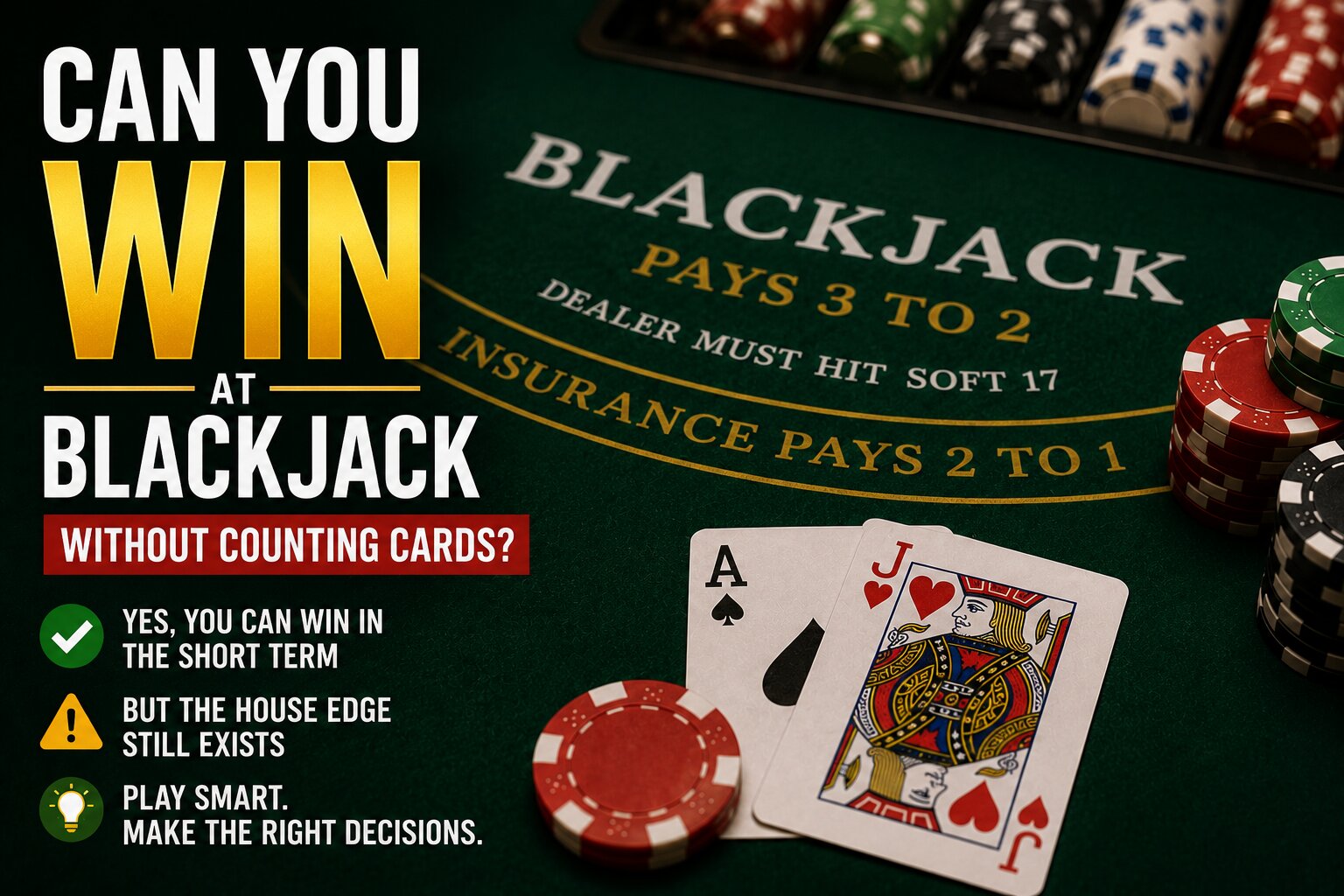
The question can you win at blackjack without counting cards is important because it separates short-term results from long-term edge. Basic strategy can improve your decisions, but it does not usually make the player favoured in standard casino conditions.
Famous blackjack players are interesting because they show what is possible under unusual conditions, with advanced knowledge, strong discipline, or special opportunities. They should not be used to suggest that blackjack is easy money.
Guest Posts On Blackjack Players And Casino Strategy
Would be interested in writing for us about casinos? We’d welcome your thoughts. We are especially interested in balanced articles that explain famous casino stories responsibly, without turning gambling into unrealistic promises of easy profit.
What Beginners Should Remember About Famous Blackjack Players
The most famous blackjack players helped shape how the game is understood.
Edward Thorp changed the mathematics of blackjack. Ken Uston helped popularise team play. Stanford Wong influenced serious strategy discussions. Al Francesco and Tommy Hyland showed the importance of organised teams. Arnold Snyder, James Grosjean, Max Rubin, Don Johnson, and John Chang each added different chapters to blackjack history.
Their stories are interesting, but they should be read with realistic expectations.
Most blackjack players are not professionals. Most are not negotiating special rules, managing teams, or identifying advanced casino opportunities. For ordinary players, the best starting point is still simple: learn the rules, understand basic strategy, choose fairer games where possible, and treat blackjack as gambling entertainment rather than a reliable income source.
That is the responsible lesson behind the legends. Famous players may make blackjack sound glamorous, but the real value for beginners is learning how the game works and respecting the risk behind every hand.