Online Slots Beginner’s Guide
Online slots are often the first type of casino game that new players try. They are easy to access, simple to understand, and available in a huge range of styles and themes.
At a basic level, slots require very little input. You choose a game, set your stake, press spin, and wait for the result. There are no complex rules to memorise and no decisions to make during gameplay, which makes them feel approachable from the start.
However, despite that simplicity, many beginners still feel unsure about how slots actually work.
What do paylines mean? What is RTP? How do bonus features work? Are some slots better than others?
This guide explains online slots from the ground up. It is designed to give beginners a clear understanding of how slots work, what to look for when choosing a game, and how to approach them in a practical, informed way.
What Are Online Slots?
Online slots are digital versions of traditional slot machines.
Instead of physical reels, online slots use software to generate outcomes. When you press the spin button, the game produces a random result that determines which symbols appear on the screen.
Modern slots often include:
- multiple reels (usually 3 to 6)
- rows of symbols
- paylines or ways to win
- bonus features
- themed visuals and sound effects
Although they may look complex, the underlying idea remains simple: match symbols in winning combinations to receive payouts.
How Slot Spins Actually Work
One of the most important things for beginners to understand is that slot outcomes are random.
Each spin is controlled by a random number generator (RNG), which produces results independently of previous spins.
This means:
- there is no pattern to predict
- past results do not influence future ones
- the game does not “know” when it should pay out
This is a key concept because many common slot myths come from misunderstanding how randomness works.
Whether you win or lose on a spin is determined the moment you press the button.
Understanding Reels, Rows, and Symbols
Most slot games are built around reels and rows.
- reels are the vertical columns that spin
- rows are the horizontal lines that display symbols
A typical slot might have 5 reels and 3 rows, but variations are common.
Each reel contains a set of symbols, such as:
- themed icons
- card values (A, K, Q, J, 10)
- special symbols like wilds and scatters
When the reels stop spinning, the arrangement of symbols determines whether you win.
What Are Paylines?
Paylines are the lines across the reels where matching symbols need to appear to create a win.
In traditional slots, paylines are fixed horizontal lines. In modern slots, they can take different shapes across the reels.
For example:
- straight lines
- zig-zag patterns
- diagonal paths
Some slots also use “ways to win” systems, where any matching symbols on adjacent reels count, regardless of their exact position.
Understanding paylines is important because it affects how wins are formed.
What Are Wild and Scatter Symbols?
Most modern slots include special symbols that add variety to the game.
Wild symbols
Wilds act as substitutes for other symbols.
They can help complete winning combinations by replacing missing symbols in a payline.
Scatter symbols
Scatters usually trigger bonus features.
Unlike regular symbols, they often do not need to appear on a payline to have an effect.
For example, landing three scatter symbols might activate a free spins round.
These features are a major part of what makes modern slots more dynamic than older machines.
What Is RTP?
RTP stands for Return to Player.
It is a percentage that represents how much a slot is expected to return to players over a long period of time.
For example:
- a slot with 96% RTP is designed to return £96 for every £100 wagered over many spins
It is important to remember:
- RTP is a long-term average
- it does not guarantee results in a short session
Even on a high-RTP slot, you can still lose over a short period.
However, RTP is still a useful indicator when comparing games.
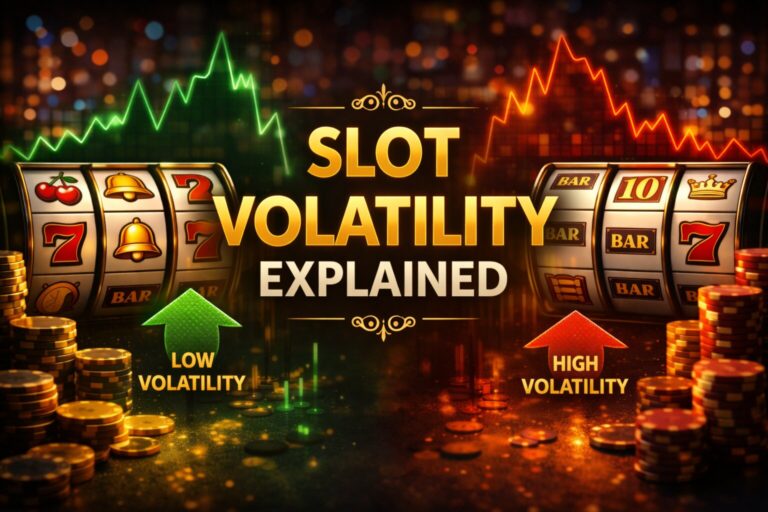
What Is Volatility?
Volatility (also called variance) describes how a slot pays out.
Low volatility
- smaller wins
- more frequent payouts
High volatility
- larger wins
- less frequent payouts
This affects how the game feels.
Low-volatility slots tend to provide a steadier experience. High-volatility slots can have longer losing stretches but offer the potential for bigger wins.
Choosing the right volatility depends on your preferences.
How Bonus Features Work
Bonus features are one of the most attractive parts of modern slot games.
These can include:
- free spins
- bonus rounds
- multipliers
- cascading reels
- expanding symbols
These features are often triggered by specific symbol combinations, such as scatters.
Bonus features can:
- increase potential winnings
- add variety to gameplay
- change how the reels behave
However, they are still part of the same random system.
How to Choose a Slot as a Beginner
With so many slot games available, choosing where to start can feel overwhelming.
A few simple considerations can help:
Look at RTP
Higher RTP slots are generally preferred by many players, although the difference is small in the short term.
Consider volatility
Think about whether you prefer steady gameplay or the possibility of larger wins with longer gaps between them.
Check the features
Some players enjoy simple slots, while others prefer games with multiple bonus features.
Try demo versions
Many casinos offer free play versions of slots. These allow you to explore games without risking real money.
Managing Your Budget
Slots can move quickly, so managing your budget is important.
A few basic tips include:
- set a spending limit before you start
- choose a stake size that fits your balance
- avoid increasing bets to chase losses
This helps keep your play controlled and reduces the risk of overspending.
Common Beginner Mistakes
There are several mistakes that new players often make.
Believing in patterns
Slots are random. There is no pattern to follow or exploit.
Increasing stakes after losses
This does not improve your chances of winning and can lead to faster losses.
Ignoring game information
Details like RTP and volatility can help you choose games more effectively.
Playing too quickly
Fast play can make it harder to keep track of spending.
Are Some Slots “Better” Than Others?
In terms of fairness, licensed slot games are designed to operate randomly and transparently.
However, slots can differ in:
- RTP
- volatility
- feature design
This means some games may suit your preferences better than others, even though none can guarantee wins.
Slots and Bonuses
Slots are often closely linked to casino bonuses.
Many bonuses:
- require slot play to complete wagering
- offer free spins on specific games
This is because slots typically contribute fully towards wagering requirements.
If you are using a bonus, it is worth checking which slots are eligible.
Keeping Expectations Realistic
Slots are designed as entertainment.
They are not a reliable way to make money, and outcomes are unpredictable.
Even with careful game selection and budgeting, the house edge remains.
Approaching slots with realistic expectations helps create a more balanced experience.
A Clear Starting Point for New Players
Online slots are easy to play but still benefit from a basic understanding.
By learning:
- how spins work
- what paylines and symbols mean
- how RTP and volatility affect gameplay
- how to manage your budget
you can approach slots with more confidence.
You do not need to understand every feature immediately. The most important step is becoming comfortable with the fundamentals.
From there, you can explore different games, try new features, and develop your own preferences.
Slots are designed to be accessible, and with a clear understanding of how they work, they become much less confusing and much more enjoyable.