Blackjack Basic Strategy for Beginners
Blackjack is one of the most widely played casino games in the world, and one reason for that is simple: compared with many other casino games, it gives players more room to make decisions. You are not just placing a bet and waiting for the outcome. On each hand, you may need to decide whether to hit, stand, double down, or split.
For beginners, that is also what makes blackjack intimidating.
At first, the game can seem full of pressure. The cards move quickly, the dealer asks for decisions in seconds, and experienced players often talk about “basic strategy” as though everyone should already understand it. If you are new to blackjack, it is easy to feel like you are missing some secret system.
In reality, basic strategy is much more straightforward than it sounds.
Blackjack basic strategy is simply the mathematically best general decision for each possible hand, based on your cards and the dealer’s visible card. It is not a way to guarantee wins, and it does not remove the house edge completely, but it helps players avoid many common mistakes and play the game more consistently.
This guide explains blackjack basic strategy in beginner-friendly terms. We will look at what basic strategy means, why it matters, the key decisions involved, and the practical ideas new players should understand before sitting at a blackjack table online or in a live casino.
What Is Blackjack Basic Strategy?
Basic strategy is a set of recommended decisions that tells you the statistically best way to play a hand in a standard blackjack game.
It is based on probability, not instinct.
Rather than guessing what “feels right,” basic strategy looks at the long-term maths behind the game. For each starting hand, and for each dealer upcard, there is usually a decision that performs better over time than the alternatives.
For example, the best play with a hard 16 against a dealer 10 is not necessarily what feels comfortable in the moment. Basic strategy exists because blackjack decisions can be counterintuitive.
This is why it is so widely discussed. Players who use a solid strategy chart are not relying on luck alone. They are making the most informed decision available in each common situation.
Why Basic Strategy Matters
Many casino games give players very little control once the bet is placed. Blackjack is different because your choices directly affect the outcome of the hand.
That does not mean you can control the cards, but it does mean poor decisions can increase losses over time, while better decisions can reduce them.
Basic strategy matters for a few main reasons.
It reduces avoidable mistakes
Many beginners hit when they should stand, stand when they should hit, or ignore opportunities to double down or split. These errors can quietly make blackjack more expensive than it needs to be.
It gives structure to the game
Without a strategy, blackjack can feel rushed and random. Once you understand the basic decision patterns, the game becomes easier to follow.
It helps keep expectations realistic
Basic strategy is not a shortcut to guaranteed profit. It is a method for playing more efficiently within the normal rules of blackjack.
That distinction is important. Basic strategy improves decision-making, but it does not turn blackjack into an easy-money game.
A Quick Refresher on How Blackjack Works
Before looking at strategy, it helps to review the objective of the game.
In blackjack, your goal is to beat the dealer without going over 21.
Number cards count at face value. Face cards usually count as 10. Aces can count as 1 or 11, depending on what helps the hand most.
You usually start with two cards, and the dealer also receives two cards, with one visible to players. Based on your hand and the dealer’s upcard, you decide how to play.
The main actions are:
- hit: take another card
- stand: keep your current total
- double down: double your stake and receive one more card
- split: divide a pair into two separate hands
- surrender: in some games, give up the hand and lose only half your stake
Not every blackjack table uses exactly the same rules, but these are the most common decisions.
The Core Idea Behind Basic Strategy
The heart of blackjack basic strategy is simple: your best move depends on both your total and the dealer’s visible card.
A total of 12 is not always played the same way. A pair of 8s is not treated like a hard 16. A soft 17 is not the same as a hard 17. And the dealer showing a 6 creates a different situation than the dealer showing an ace.
That is why blackjack strategy is usually organised into three categories:
- hard hands
- soft hands
- pairs
Understanding those categories is the easiest way for beginners to start learning.
Hard Hands Explained
A hard hand is a hand without an ace counted as 11.
For example:
- 10 and 7 is a hard 17
- 9 and 5 is a hard 14
- 10 and 6 is a hard 16
These hands are called “hard” because they are less flexible. If you take another card, you are often at greater risk of busting.
General hard-hand strategy
Although full strategy charts are more detailed, beginners can understand a few broad patterns.
If you have a very low total, such as 8 or below, you will usually hit because your hand is too weak to stand.
If you have a strong total, such as 17 or more, you will usually stand because hitting carries too much bust risk.
The interesting area is in the middle, especially totals like 12 through 16. These hands are often the hardest for beginners because the right decision changes depending on the dealer’s upcard.
A common pattern is this:
- when the dealer shows a weak card, such as 4, 5, or 6, you often stand on medium totals
- when the dealer shows a strong card, such as 7 through ace, you often need to hit more aggressively
That is because weak dealer cards make it more likely the dealer will bust, while strong dealer cards put more pressure on the player to improve their hand.
Soft Hands Explained
A soft hand is a hand containing an ace that is currently being counted as 11.
For example:
- ace and 6 is a soft 17
- ace and 7 is a soft 18
These hands are more flexible than hard hands because the ace can drop from 11 to 1 if needed. That gives you more room to take another card without busting immediately.
This is one of the most important beginner concepts in blackjack.
Why soft hands are played differently
Because soft hands have that built-in flexibility, players can afford to play them more actively in certain situations.
For instance, a soft 17 is not actually a strong standing hand. Even though it totals 17, it has room to improve. A hard 17 usually stands. A soft 17 is often treated very differently.
Many basic strategy decisions around soft hands involve doubling down when the dealer shows a weak card. This is because soft totals can improve well with one extra card.
Soft-hand strategy often feels strange to new players at first, but it becomes easier once you stop thinking only about the number total and start thinking about how flexible the hand is.
Pairs Explained
A pair means your first two cards are the same value, such as:
- 8 and 8
- ace and ace
- 10 and 10
- 7 and 7
When you receive a pair, you may have the option to split. This creates two separate hands, with a new stake added for the second hand.
Basic strategy does not treat all pairs equally. Some should usually be split, some should almost never be split, and some depend on the dealer’s card.
Common beginner pair rules
A few pair decisions are especially well known.
Always split aces
A pair of aces is one of the most widely accepted splits in blackjack. Starting with two separate hands that each begin with an ace gives you much better potential than keeping a total of 12.
Always split 8s
A pair of 8s gives you 16, which is one of the weakest totals in blackjack. Splitting turns that poor starting position into two separate chances to build better hands.
Usually do not split 10s
A pair of 10-value cards gives you 20, which is already a very strong total. Splitting it usually weakens your position.
Usually do not split 5s
A pair of 5s totals 10, which is often a strong doubling-down hand. Treating it as a pair to split is generally less effective than playing it as a total of 10.
These are not the only pair decisions in blackjack, but they are some of the most useful for beginners to remember.
When to Hit
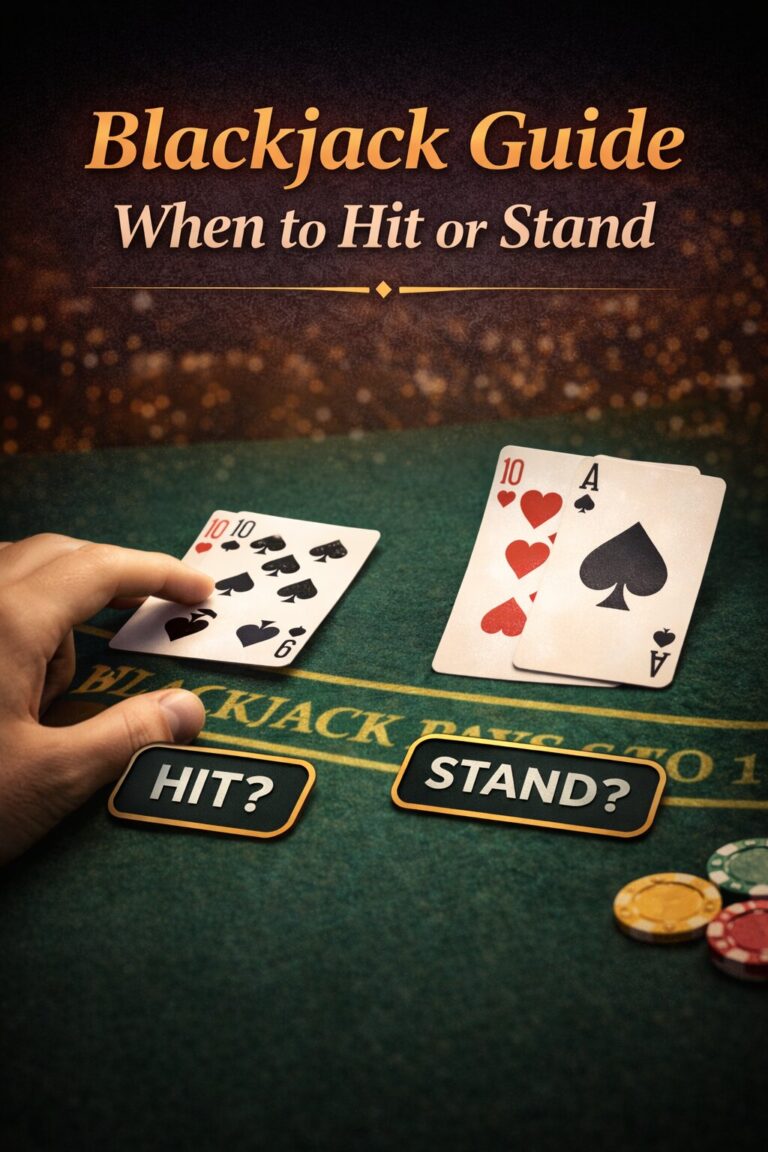
Hitting means taking another card to improve your hand total. Understanding when to hit and when to stand is at the heart of blackjack strategy.
Beginners sometimes fear hitting because they focus only on the risk of busting. But in blackjack, standing on a weak hand can often be worse than taking the risk.
You will usually hit when:
- your total is too low to compete with the dealer
- the dealer is showing a strong upcard
- your hand has flexibility, as with many soft totals
For example, standing on a hard 12 against a dealer 10 may feel safe because you are not busting, but it usually leaves you in a poor position. The dealer is more likely to finish with a stronger hand, so basic strategy often recommends hitting in spots like that.
This is one of the biggest beginner adjustments in blackjack: learning that avoiding busting is not the only goal. You also need a hand that can realistically beat the dealer.
When to Stand
Standing means you keep your current total and end your decision-making for that hand.
You will usually stand when:
- your hand is already strong
- hitting would create too much unnecessary bust risk
- the dealer is showing a weak card and may bust on their own
A classic example is standing on a hard 13 through 16 against a dealer 4, 5, or 6. Many beginners want to hit because their hand still looks weak, but the dealer’s upcard changes the situation. If the dealer is in a vulnerable position, standing may be the better long-term choice.
This reflects another core blackjack idea: you are not playing your hand in isolation. You are playing your hand against the dealer’s visible card.
When to Double Down
Doubling down means increasing your original bet and taking exactly one more card.
This is one of the most important tools in blackjack basic strategy because it allows players to put more money into situations where they are statistically favoured to improve.
Beginners often ignore doubling because it feels risky, but it is a key part of efficient blackjack play.
Common doubling situations include:
- hard 10 against certain dealer cards
- hard 11 against most dealer cards
- some soft totals against weak dealer cards
The logic is simple. If the probability of improving your hand is strong, and the dealer is in a weaker position, doubling can make sense.
That does not mean every 10 or 11 should always be doubled under every ruleset, but these are common starting points beginners can learn.
When to Split
Splitting creates two separate hands from a pair.
This can be a powerful move, but it is also one that many beginners misuse. Some split too often because they enjoy the action. Others never split at all because they dislike increasing their stake.
Basic strategy treats splitting as a practical decision, not an emotional one.
As mentioned earlier:
- aces are usually split
- 8s are usually split
- 10s are usually not split
- 5s are usually not split
Other pairs, like 2s, 3s, 6s, 7s, or 9s, can depend more on what the dealer shows and on the table rules.
The important point is that splitting is not just about “making two chances to win.” It is about whether two separate hands are likely to perform better than the original one.
When Surrender Might Matter
Some blackjack tables offer surrender, which lets you give up the hand and lose only half your original stake.
This option is not always available, but when it is, it can be part of basic strategy in certain difficult spots.
For beginners, surrender is less essential than learning hit, stand, double, and split, but it is useful to know the concept exists. In some very poor situations, surrendering can be mathematically better than playing the hand out.
If the blackjack game you are playing includes surrender, the strategy chart for that table may include a few specific surrender decisions.
Why Dealer Upcards Matter So Much
One of the biggest beginner mistakes is focusing only on your own hand.
In blackjack, the dealer’s visible card is central to good decision-making.
A dealer 4, 5, or 6 is often considered weak because the dealer has a higher chance of busting while forced to draw. A dealer 7, 8, 9, 10, or ace is generally stronger and puts more pressure on the player.
That is why the same player total can be played differently depending on what the dealer shows.
For example:
- a hard 12 against dealer 4 may be a stand
- a hard 12 against dealer 10 may be a hit
That difference can seem strange until you understand that blackjack strategy is built around the matchup, not just the raw total.
Does Basic Strategy Guarantee Better Results Every Session?
No. That is important to state clearly.
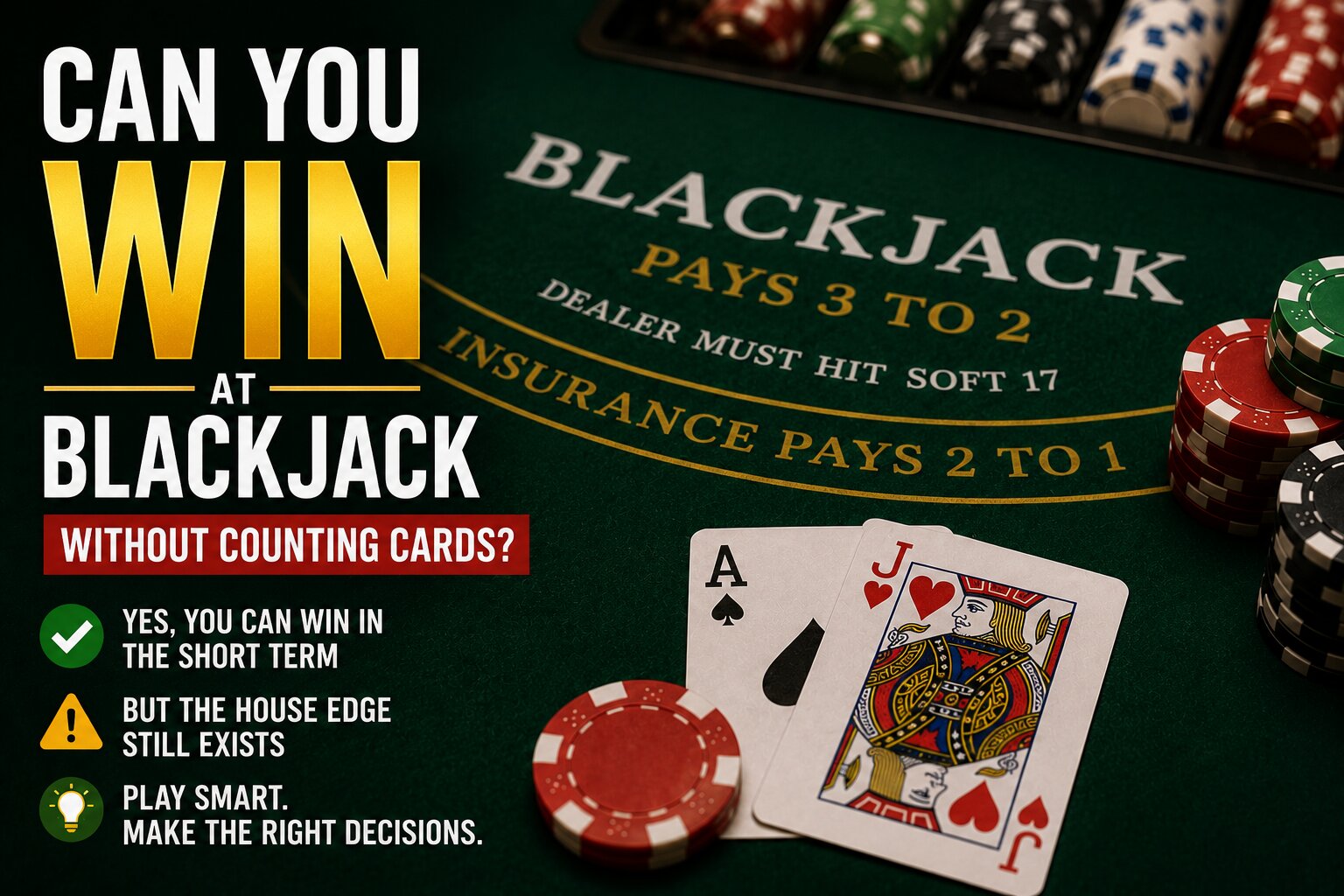
Basic strategy improves your long-term decision quality, but it does not guarantee that any short session will go well.
You can play every hand correctly and still lose. You can also play badly and win over a short run. That is how variance works in casino games.
The value of basic strategy is that it gives you the best available route over time, not instant control over outcomes.
For a beginner, this mindset matters. The goal is not perfection or instant profit. The goal is to avoid obvious mistakes and play in a more disciplined way.
Common Beginner Mistakes
There are a few mistakes that come up repeatedly when new players try blackjack.
Treating all 17s the same
A hard 17 and a soft 17 are very different hands. The ace changes the flexibility of the total.
Refusing to double down
Some beginners almost never double because they do not like increasing their bet. That means missing an important part of good blackjack play.
Splitting the wrong pairs
Splitting 10s or refusing to split 8s are common examples of pair mistakes.
Ignoring the dealer’s upcard
Blackjack decisions are always about both sides of the table, not just your total.
Assuming strategy can beat the game outright
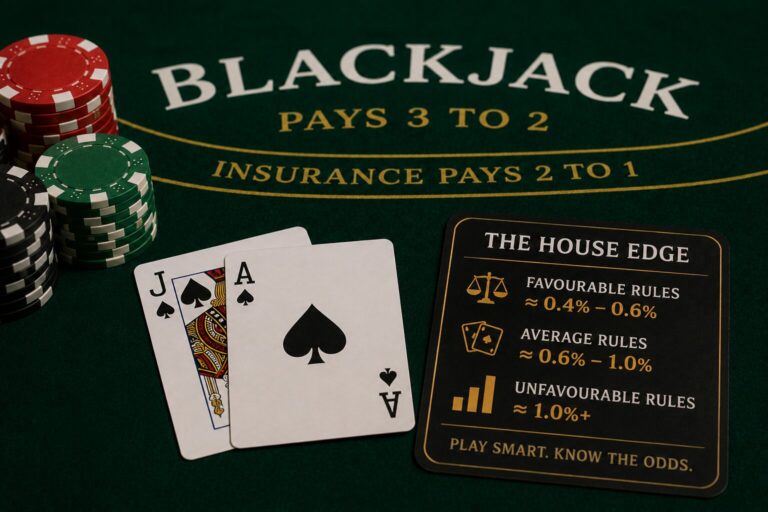
Basic strategy helps reduce mistakes. It does not remove the house edge entirely or make results predictable.
The Best Way for Beginners to Learn Basic Strategy
The easiest way to learn basic strategy is not to memorise every line at once. It is to build familiarity gradually.
A useful beginner approach is:
- learn the difference between hard hands, soft hands, and pairs
- remember a few key rules first, such as always split aces and 8s
- focus on common hard-hand decisions next
- use a basic strategy chart when practising online
Many players improve quickly once they stop trying to guess and start referring to a chart consistently.
Online blackjack can actually be helpful for learning because the pace is slower than a live table, and you have more time to think.
A Smarter Starting Point for New Players
Blackjack basic strategy can sound technical, but the principle is simple: make the decision that gives you the best statistical chance in the long run.
That means understanding that some hands should be hit, some should be stood on, some should be doubled, and some pairs should be split. It also means recognising that the dealer’s upcard changes everything.
For beginners, the biggest advantage of learning basic strategy is not that it makes blackjack easy. It is that it makes the game clearer. Instead of relying on impulse or superstition, you start to see the logic behind each choice.
That creates a better foundation for playing responsibly and understanding what blackjack really is: a casino game where decisions matter, but where results are still shaped by chance.
The best beginner approach is not to chase complex systems or assume that strategy guarantees profit. It is to learn the fundamentals, use a reliable strategy chart, and treat the game as a form of entertainment rather than a source of income.